
OpenSource AI Mixer: why builders are looking at China, and three gates for agents that move money
이 글은 한국어로도 제공됩니다. 한국어로 읽기 →Want to feel what the night was like? From the talks to the networking and everything in between, here's the aftermovie from the OpenSource AI Mixer 🎥.
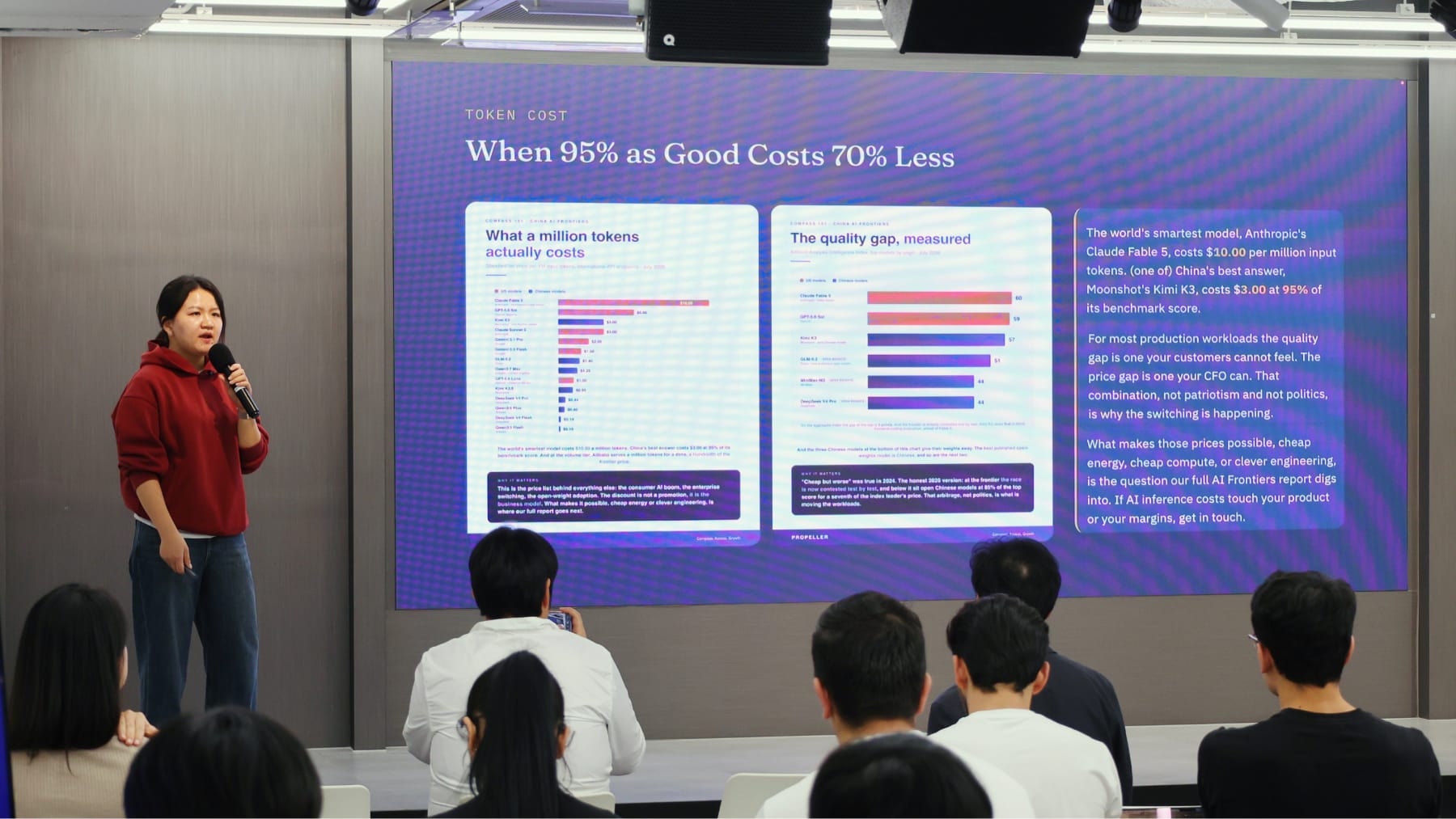
On October 2 we ran the OpenSource AI Mixer at dcamp Seolleung, together with The Arch and PROPELLER. About 90 people came out. It also fell during Korea Blockchain Week, so we had plenty of new faces from the blockchain crowd, including people visiting from abroad.
The idea behind the evening was simple. China's open-weight models, like Kimi, Qwen, MiniMax and DeepSeek, now sit among the best in the world, but most developers in Seoul only meet that progress secondhand, through news, demo videos and social media. So we brought people building inside that ecosystem to Seoul to meet Korean developers face to face.
How many of you have been to China?
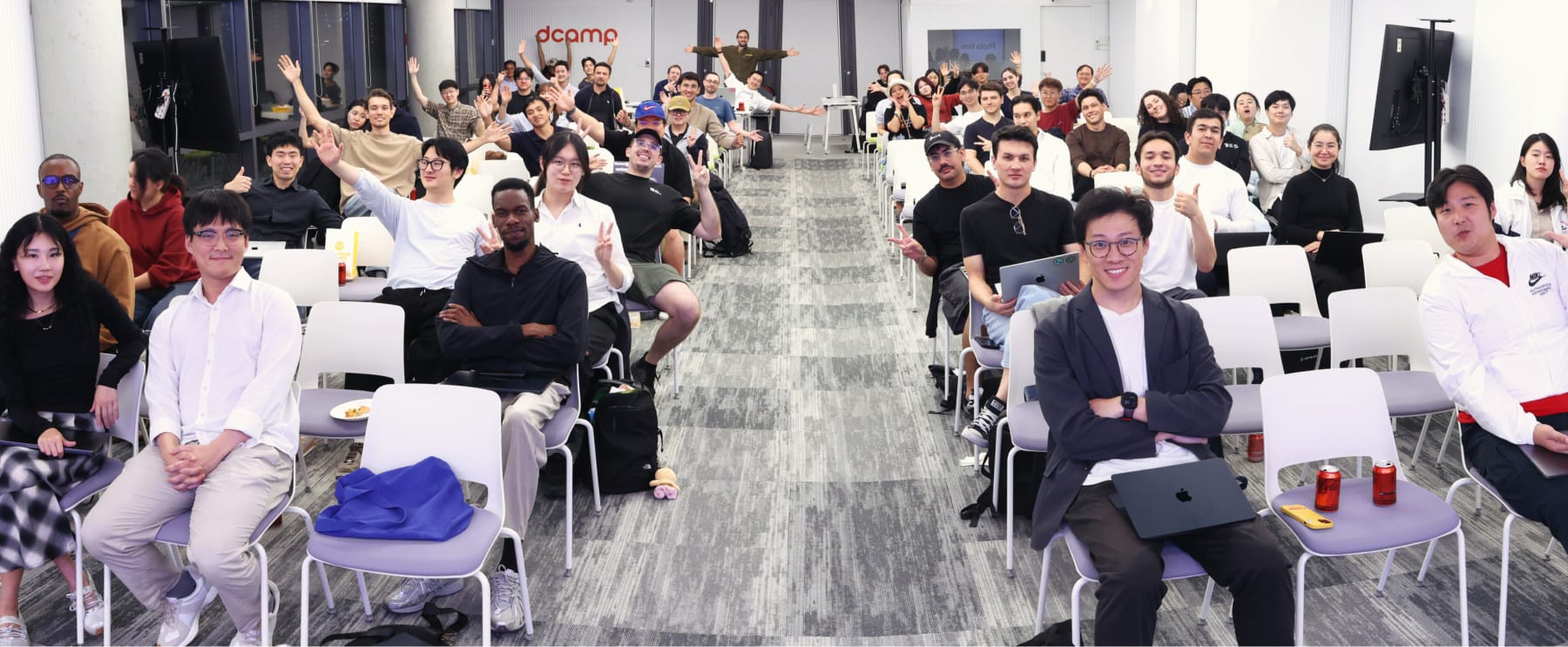
Ming AI opened with a show of hands: how many people in the room had been to China? Six hands went up.
That was the starting point. For most people, China's tech ecosystem is still a blind box. Ming runs PROPELLER, a cross-border venture builder in Shanghai, after years spent deep in China's open-source ecosystem, including an international builder community that now reaches around 100,000 followers across Chinese platforms. Ming was clear about being neutral on geopolitics, and was there to share what is actually happening on the ground, including a few things that might go against what people assume.
The talk wasn't about a new tech stack. It was aimed at founders: how to design a business around what Ming called China's AI dividends, built on three pillars.
Cost. Builders in Shanghai's international community often can't afford to run every experiment on frontier closed models. When you're testing 20 ideas, Kimi, Qwen or GLM often get close enough in quality at a fraction of the price. Some switch back once an idea gets traction. One foreign builder told Ming that GLM simply worked better for him.
Talent. By Ming's numbers, China trains around 47% of the world's AI talent. The argument: get close to that talent early, before they're hired away, and you can bring them into your venture sooner. Ming also pointed to speed of execution and diligence, and to how fierce the competition inside China itself has become.
Policy. Ming described China as the country backing AI solopreneurs the hardest right now, with grants for tokens and facilities, and local governments actively helping startups find customers. Founders from the US, the UK and Germany are often surprised by how much support exists.
Three builders from The Arch
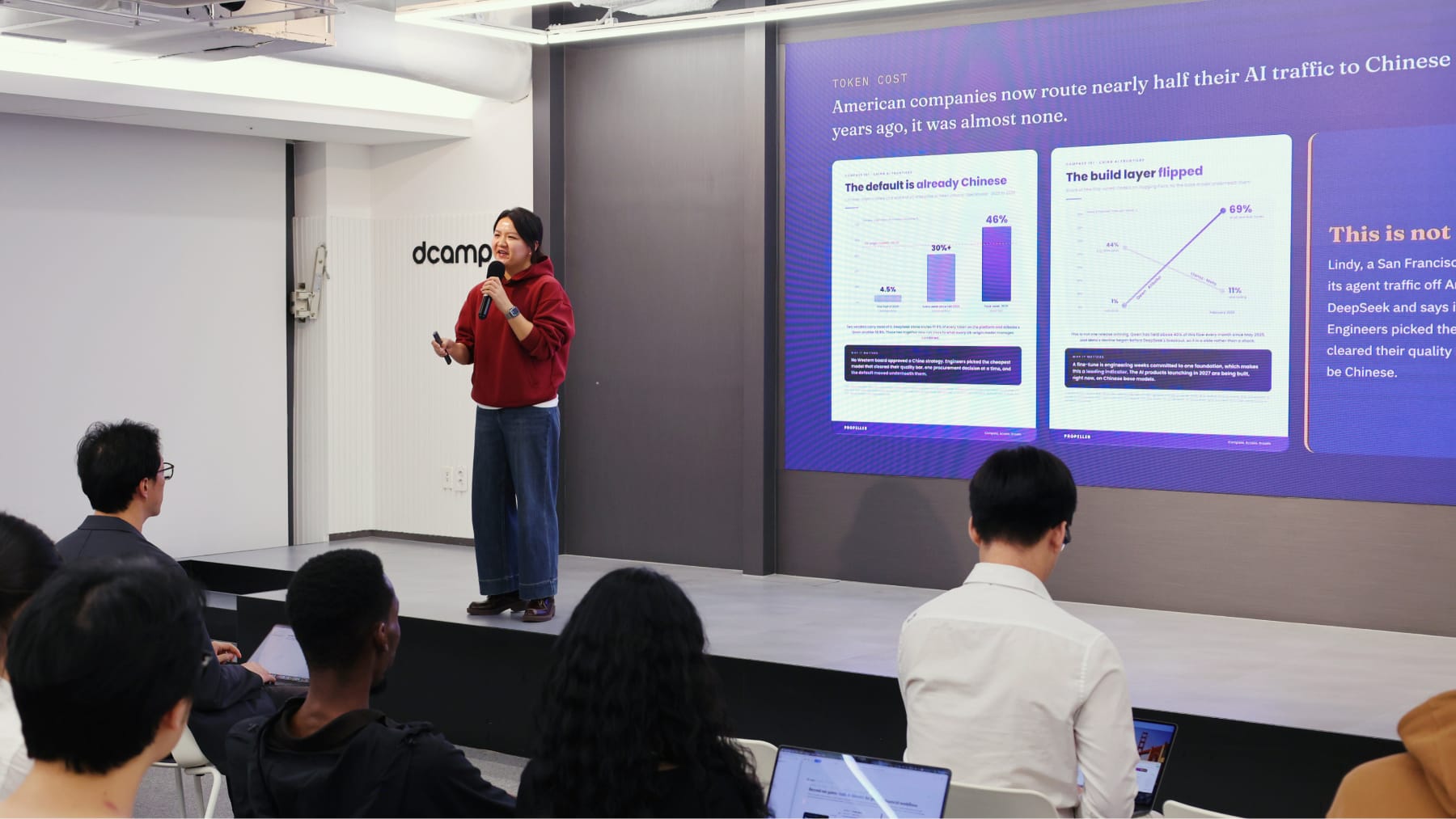
Ming then handed over to three entrepreneurs-in-residence from The Arch, each showing what they're building.
Lawted Wu, founder of HA7CH, joined remotely and made the case for designing a company around agents from the start. The analogy was Ford's moving assembly line: the big gain didn't come from better tools, it came from reorganizing how work moves between stations. Giving everyone a personal agent isn't enough, because each agent has its own context, permissions and priorities. The alternative is one company-level agent with shared context, where people work more like the tools it calls on: the agent does everything it can, then asks the responsible person for a yes, a no, or a missing piece of information.
An Lu demoed cue, which he built after years of pitching in China with limited Chinese. Your AI agent writes the presentation straight onto cue, the presentation runs as code, and the audience scans a QR code to follow along on their own phone, in their own language, with live captions. That night it ran in Korean, Chinese and English at the same time.
Klein He, founder of Mindfold, built Trellis, an open-source framework that persists specs, tasks and memory into the repo so any coding agent works to a team's standards. It now has over 13,000 GitHub stars. The point: AI writes code fast, but speed was never the bottleneck. The bottleneck is that AI doesn't know your company, so every session starts from zero. Klein also explained why Mindfold is now building its own harness instead of living as a plugin on top of other agents, and mentioned they're hiring engineers and designers.
"China is not scary"
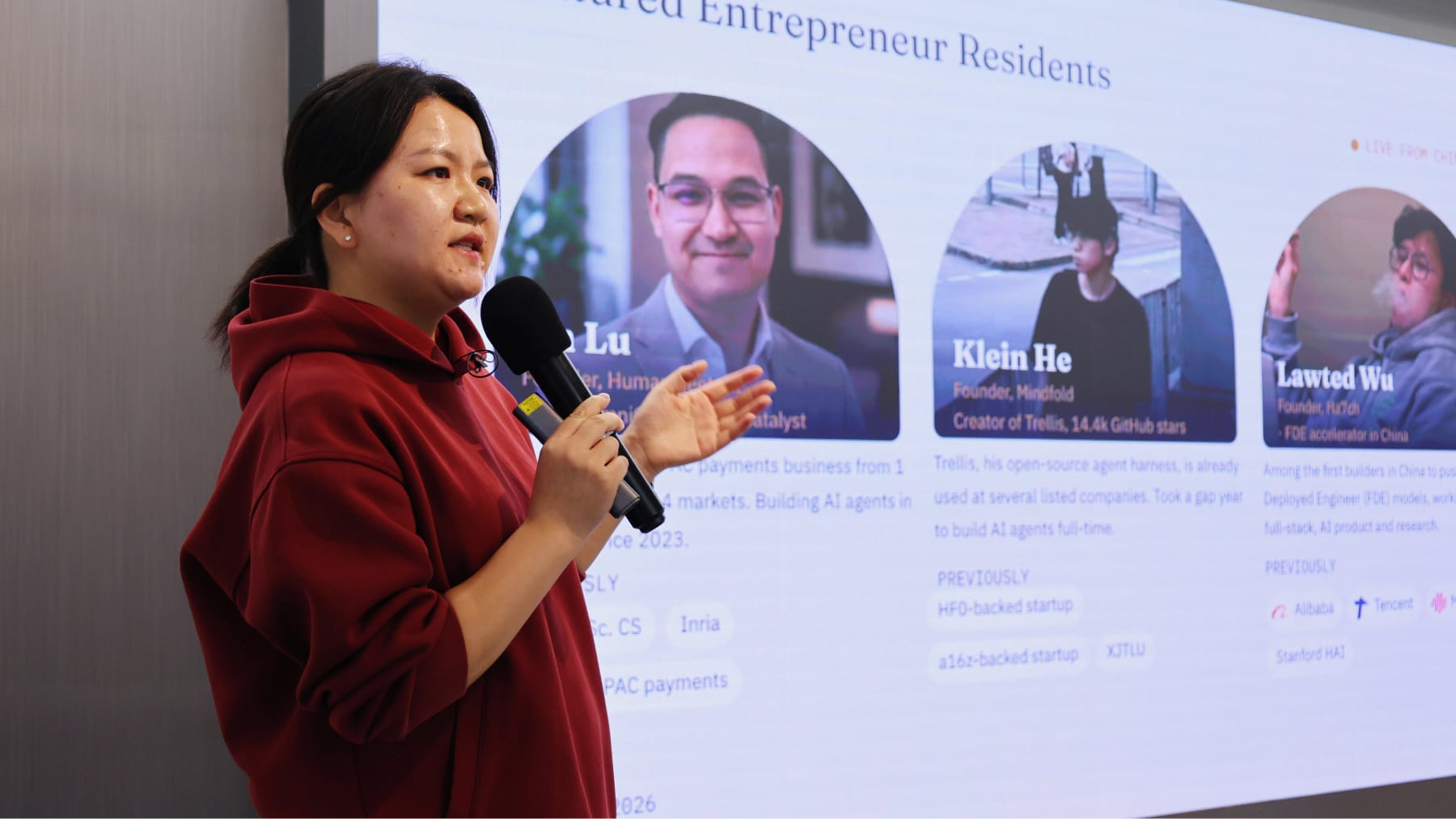
Ming closed with some history from the international community in Shanghai. Foreign founders flocked in around 2016 to 2018, interest hit its lowest point in 2022, and since 2023, and especially in 2025, there has been a real shift back.
Two stories made the point. A Spanish founder came for two weeks without a real agenda, looking for manufacturing partners for a fashion tech idea, and left without finding the right people. An Italian founder with exits in Europe spent two years learning Chinese, the culture and how the country is governed before moving to Shanghai to build software for robotics, because China is where robotics is actually shipping.
That gap is what The Arch is built for: a three-week immersion across Shanghai, Beijing, Hangzhou and Shenzhen, from November 1 to 21, with a Keystone path for more established founders, institutions and investors, and a heavily subsidized Roamer path for early-stage builders, including a job fair.
Ming's one takeaway: China is not scary. But you need to find the right doers, both mission-driven local founders and expats who are deeply integrated, and you need the stamina to keep going past the first try or two.
Link: A bridge to China's tech and an introduction to The Arch, full talk
Three gates from intent to settlement
Then Cecilia Zhang, founder of Aomi Labs, brought things down to a very concrete problem: what happens when an AI agent moves money?
Aomi Labs builds a harness for on-chain transactions, a kind of chat-to-trade interface that plugs into tools like Claude Code and Codex. Without it, asking Claude to send a friend one ETH means the model has to figure out the RPC, the smart contract, and how to encode and sign the transaction. A frontier model can probably get there, slowly. With the right harness, even open-weight models like Kimi K2 perform very well on these tasks.
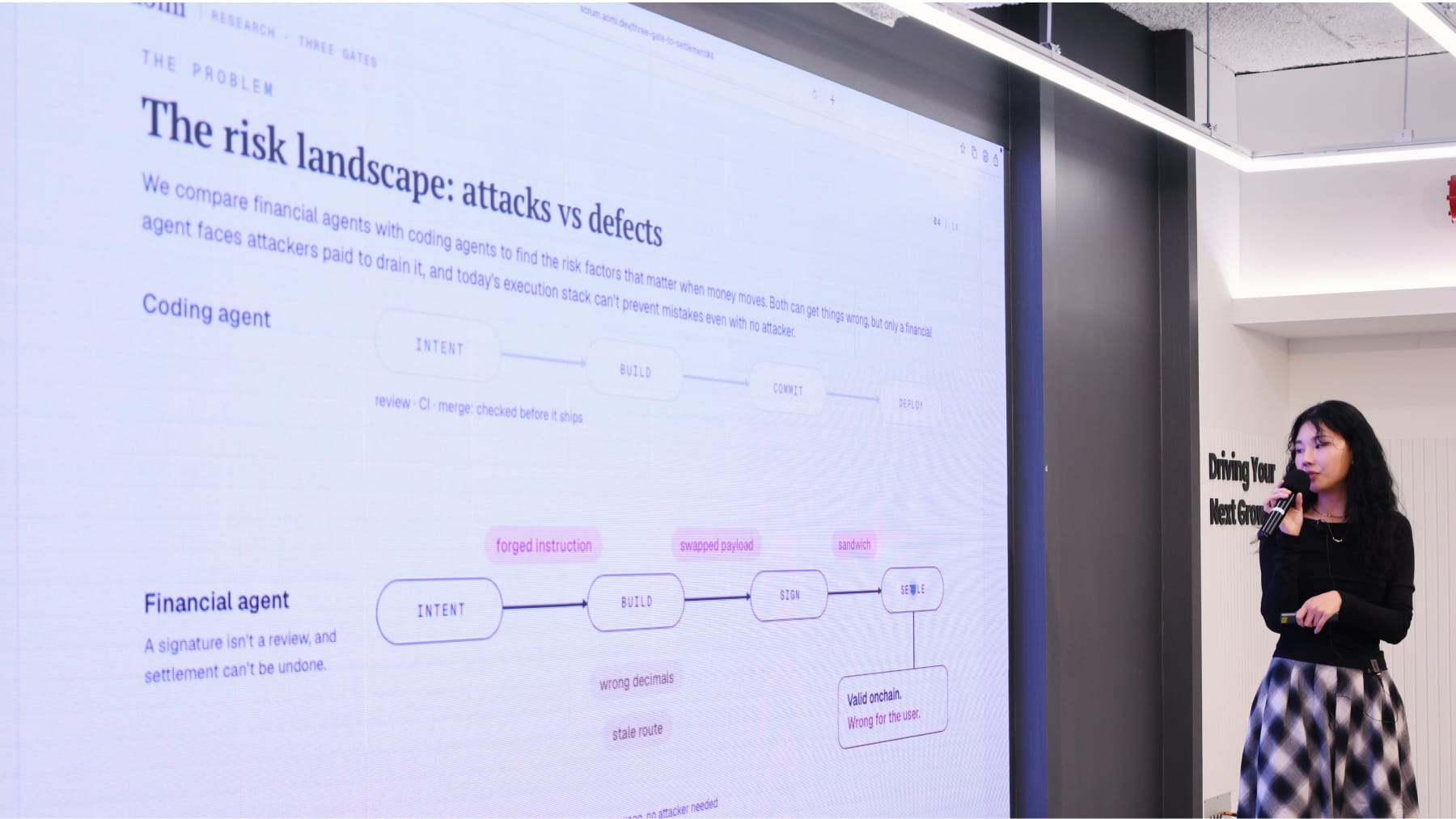
Her framing: a financial agent works a lot like a coding agent. Intent, then build, then sign, then settle. Swap the human for an AI at each step and you can map where things go wrong:
- Forged instructions: someone changes the intent, and a shirt becomes a $2,000 bag
- Build bugs: a wrong decimal or a stale route
- Payload swaps: the transaction gets altered before it's signed
- Front-running: someone sees your trade coming and moves the price before it lands
Her answer is a series of gates.
At runtime, the harness removes room for mistakes. The model never handles raw bytes: the harness resolves the contract and the function signature, and the model only supplies the arguments. And because blockchains can be forked, a transaction can be simulated in a sandbox first. That recreates the back pressure coding agents get from CI: build, check, fail, revise, until it passes.
At signing, the keys live somewhere else. Keep the agent's runtime and the wallet on separate machines, with keys in a secure enclave or a multi-party computation setup, so signing becomes a request the agent can make, never something it does directly. Her reasoning was simple: agents get jailbroken.
On chain, smart accounts can enforce policy: spending limits, blocked addresses, protocols that shouldn't be touched, sanctions rules. Even if someone signs something they shouldn't at 3 a.m., the transaction can revert.
At settlement, a final check sits next to the block builder, drops transactions that break the rules, and protects them in the mempool against sandwich attacks. She compared it to your bank calling you before a suspicious payment goes through.
Her example tied it together: you want to keep $2,000 liquid and deposit the rest. The agent thinks you have $4,000, but you only have $3,000. The wallet's policy catches the wrong number before anything moves.
She ended on identity. The pattern she sees working is a canonical, KYC'd identity for the user, with agents authorized per session, much like OAuth today, and revocable the same way.
Link: Enabling agentic finance: Three gates from intent to settlement, full talk
The room
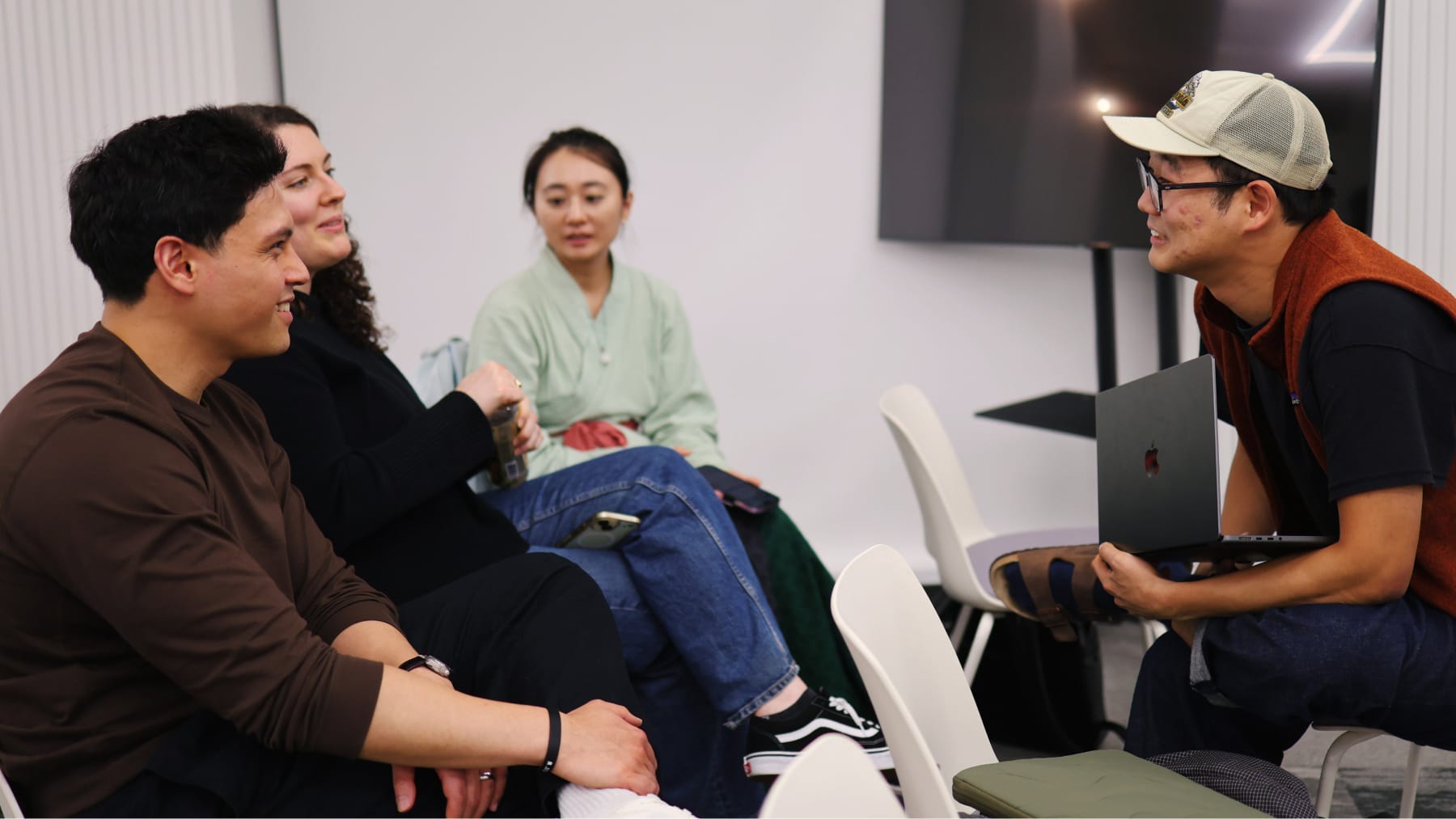
Around 90 people joined us. We started with check-in and food, the usual pizza and burgers, with the burgers from Cry Cheeseburger. After the talks, the room stayed open for networking until closing.
Huge thanks
This event wouldn't have happened without:
- Ming AI, The Arch and PROPELLER for bringing a piece of China's AI ecosystem to Seoul
- Lawted Wu, An Lu and Klein He for showing us what they're building
- Cecilia Zhang for walking us through what it takes to let agents move money safely
- dcamp for hosting us at Seolleung
- Cry Cheeseburger for the burgers
- The volunteers who kept the night running: Brian, Jonathan, and Oscar
- And all 90 of you who came
Watch the talks
Both full talks are online:
- A bridge to China's tech and an introduction to The Arch, Ming AI
- Enabling agentic finance: Three gates from intent to settlement, Cecilia Zhang
You can also find every published Dev Korea talk on our talks page.
See you at the next one.
Ready for your next move?
Visit Dev Korea to explore the latest job openings at dev-korea.com/jobs, or if you're hiring, post a job at dev-korea.com/post-a-job and connect with our growing international tech community.