




What moving house in Korea actually looks like: our moving day in Seoul
이 글은 한국어로도 제공됩니다. 한국어로 읽기 →A few days ago, my wife and I moved from our old apartment to a new one in Seoul.
Moving house is obviously not something unique to Korea. But having now done it here, there were quite a few parts of the process that felt distinctly Korean, from having a moving company pack and unpack almost everything for us, to the huge ladder truck outside our old apartment, putting down protective covering in the new apartment, my mother-in-law putting red beans in the corners of the apartment, and a final trip to the local 주민센터 (jumin center) to update my address.
So rather than trying to write a definitive guide to moving in Korea, I thought I'd document what our moving day actually looked like.
Hopefully it gives you an idea of what to expect if you're moving apartments here for the first time.
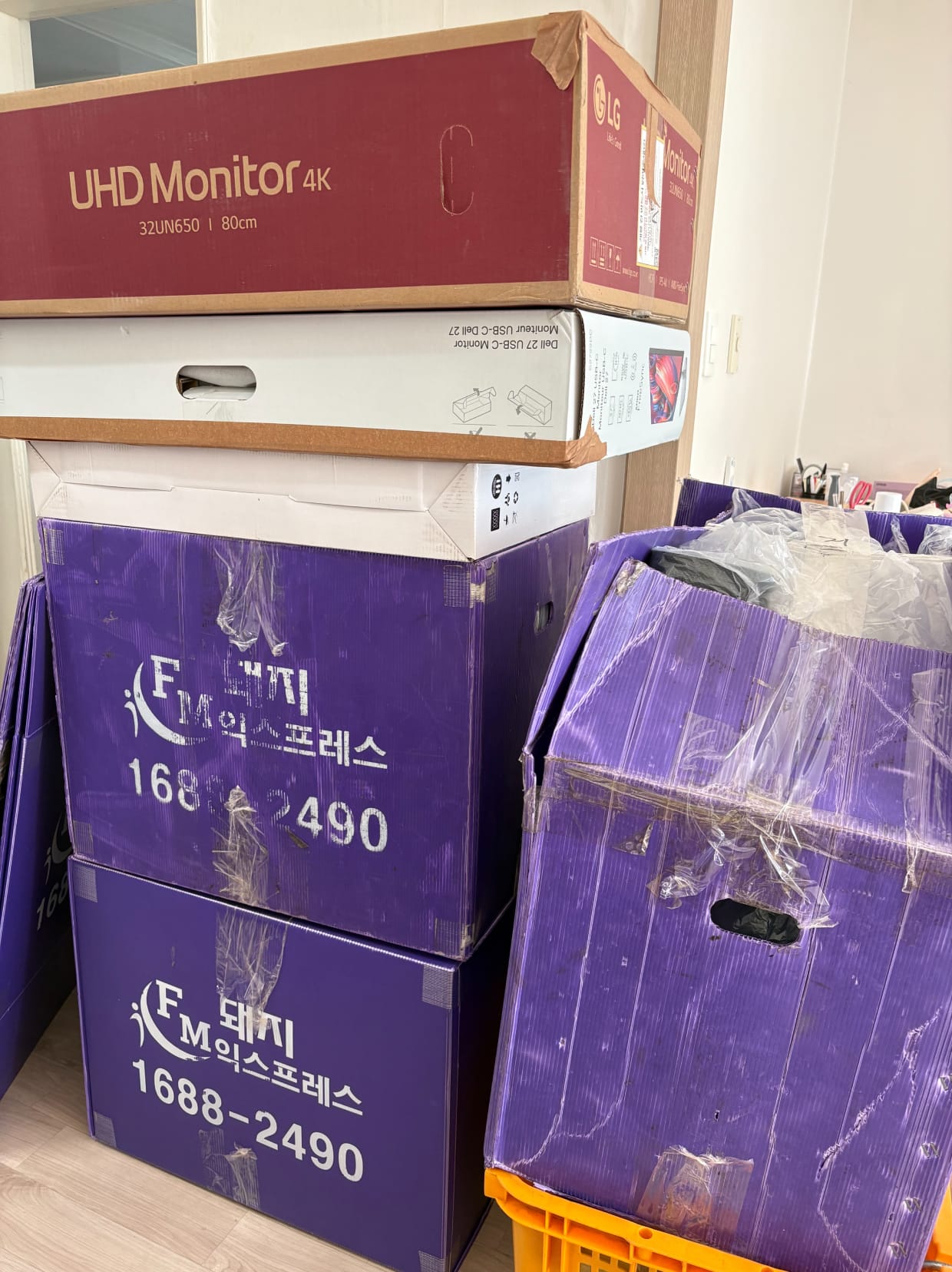
We chose 포장이사, and I'm very glad we did
For the move, we chose what is called 포장이사 (pojang-isa) in Korean.
The easiest way to describe it is a full-service move. The moving company doesn't just transport your furniture from point A to point B. They pack your belongings at the old apartment, move everything, and then unpack and put things back at the new place.
And when I say they pack everything, I really mean almost everything.
Clothes, kitchen items, books, furniture. The team went through the apartment and packed everything into their own boxes and containers.
For our move, the total cost ended up being 900,000 KRW.
We paid a 50,000 KRW deposit when booking, followed by 800,000 KRW for the move itself. We then paid an additional 50,000 KRW because the movers had to wait around 1.5 hours before they could start unloading at the new apartment.
That extra waiting fee wasn't mentioned in our contract. In our case, the delay happened because the concierge at the new building was away for lunch and we couldn't start moving things in until they returned.
It's probably something worth keeping in mind when planning a move in Korea. Even if the moving quote itself is fixed, delays at either building can potentially result in an additional charge.
In our case, we were moving from approximately 39 m² to 43 m².
I have quite a bit of tech equipment, and one thing I specifically wanted them to be careful with was my motorized standing desk. It's large, made up of several parts, and fairly expensive, so I asked them to take extra care with it.
They did. The desk and the rest of our furniture were packed very carefully, and anything that needed extra protection was properly wrapped before being moved.
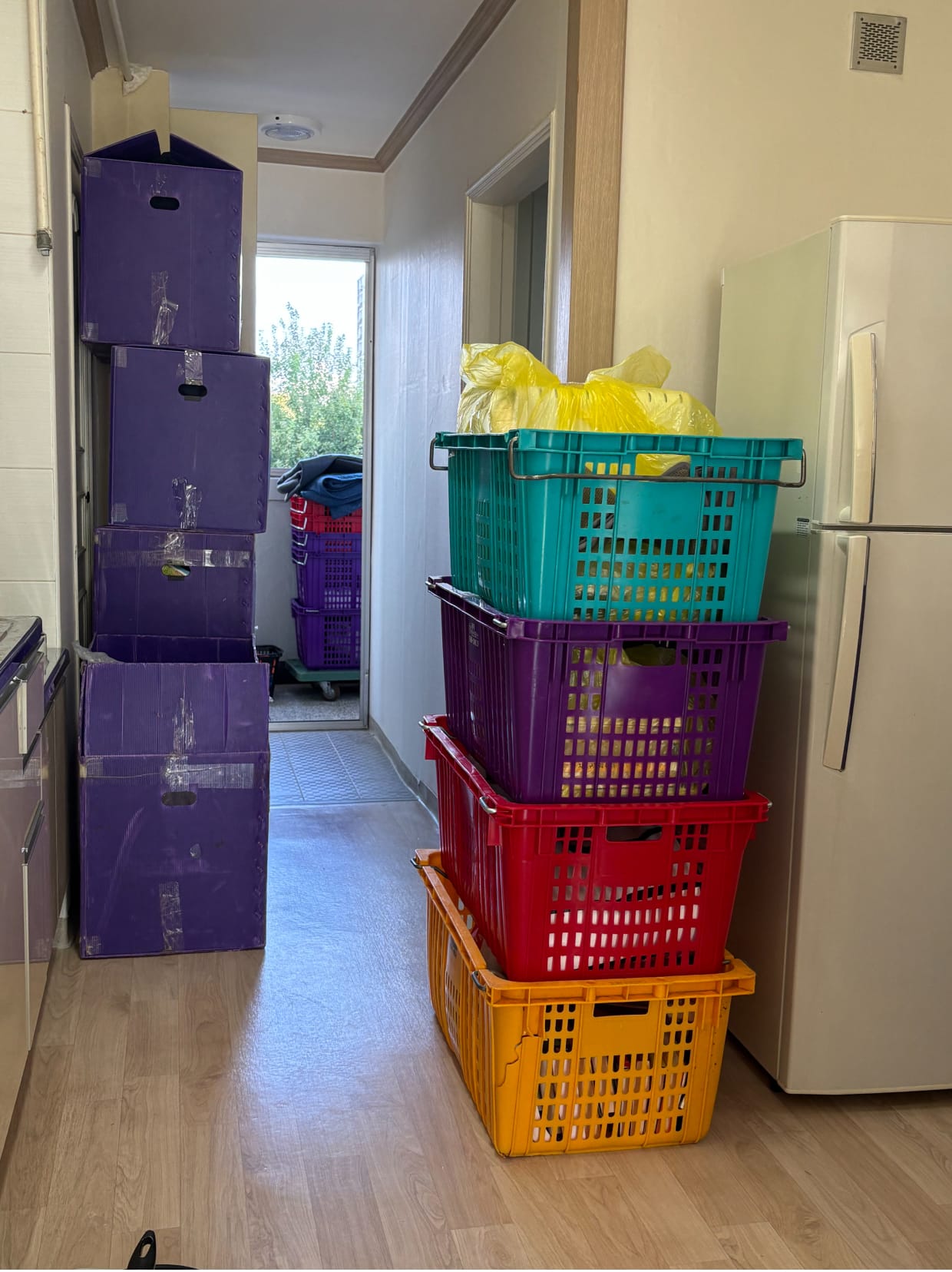
The part that impressed me most came at the other end.
They didn't simply unload dozens of boxes into our new apartment and leave us with several days of work.
They actually unpacked things.
Clothes went back into closets and drawers. Furniture was placed where we wanted it. Items were brought back into the appropriate rooms, and the movers paid attention to how things had been organized in the previous apartment.
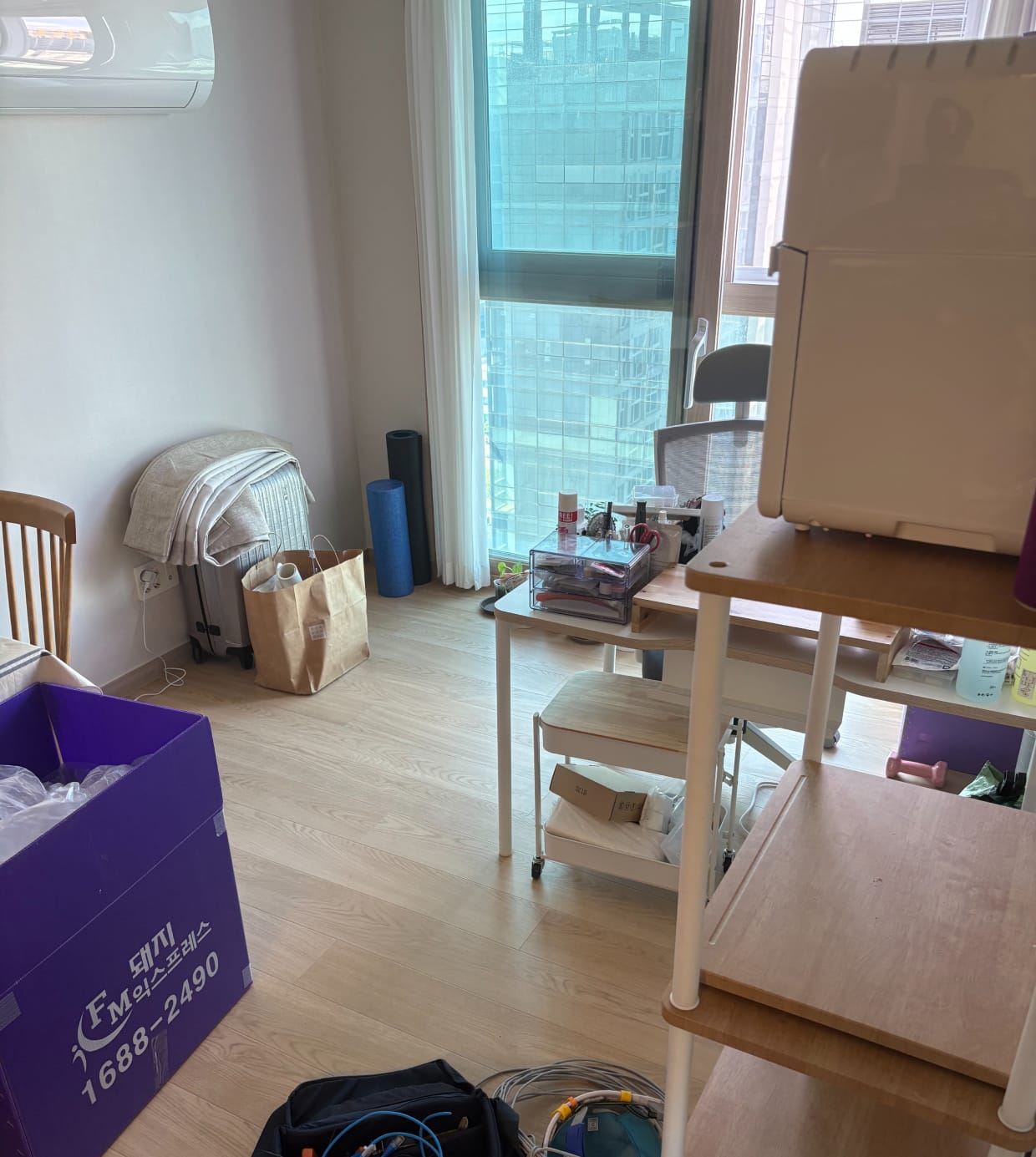
Of course, that doesn't mean the apartment magically looked finished at the end of the day.
I still had this waiting for me:
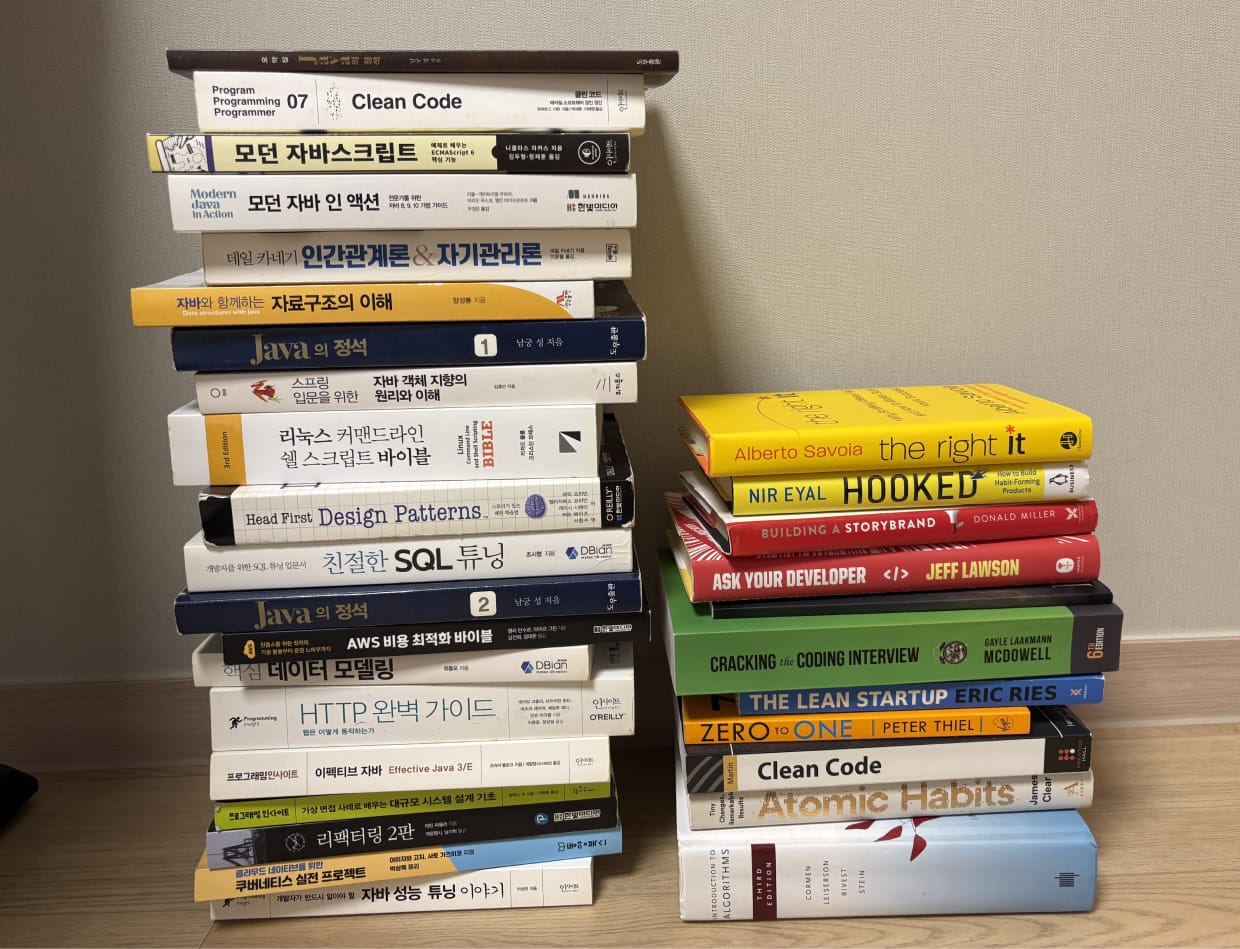
Apparently even 포장이사 has its limits.
But compared with packing, carrying and unpacking an entire apartment ourselves, the service made the whole move dramatically easier.
What the day actually looked like
The movers arrived at our old apartment at around 8:00am.
By roughly 11:00am, they had finished packing everything and clearing out the apartment.
Because we were renting under a jeonse contract, the next hour wasn't really about moving. From around 11:00am to noon, we were at the real estate agency handling the paperwork for the end of the lease and getting our jeonse deposit back.
After that, we took a taxi to the new apartment, which was about a 30-minute drive.
We arrived around 12:30pm, but had to wait until about 1:00pm because the concierge at the new building was still on lunch break.
Once we could start, the movers brought everything up to the 19th floor, unpacked, and started putting things back in place.
They were completely finished by around 3:00pm.
So the actual moving work took around five hours in total, split between the morning packing at the old apartment and the afternoon unloading and unpacking at the new one.
Considering that they packed almost everything for us, moved the furniture, used the ladder truck at the old apartment, brought everything up to the 19th floor at the new place, and then unpacked and reorganized a lot of it, that felt incredibly efficient.
My mother-in-law arrived around 4:00pm, which is when the red beans started appearing in the corners.
Yes, there was a giant ladder outside our apartment
One of the most visually interesting parts of moving in Korea is the 사다리차 (sadaricha).
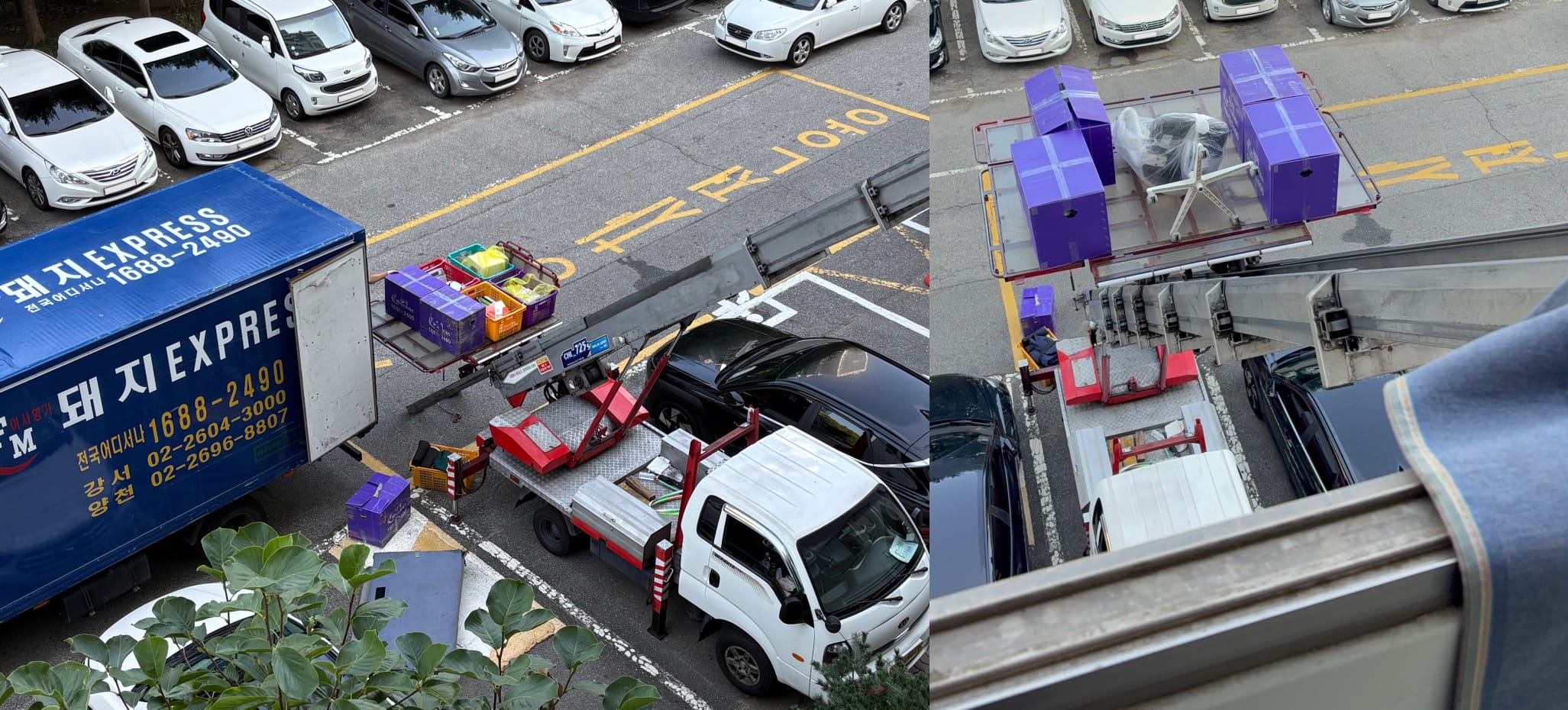
It's essentially a truck with a long exterior lift that can reach the windows or balconies of apartments several floors above the ground.
Our previous apartment was on the 4th floor, so the movers could use the ladder truck there. Instead of carrying everything through the building, they loaded boxes and furniture onto the platform outside the apartment and sent them directly down to the truck.
Our new apartment is on the 19th floor, so the ladder truck wasn't an option when we arrived. Everything had to be brought up through the building instead.
That made the contrast pretty interesting. At the old place, our belongings were literally disappearing out of the window. At the new place, the team had to handle the unloading much more traditionally through the building.
If you've spent much time walking around residential neighborhoods in Korea, you've probably seen these trucks before. They're a very familiar sight on Korean moving days, especially around apartment buildings.
Arriving at the new apartment
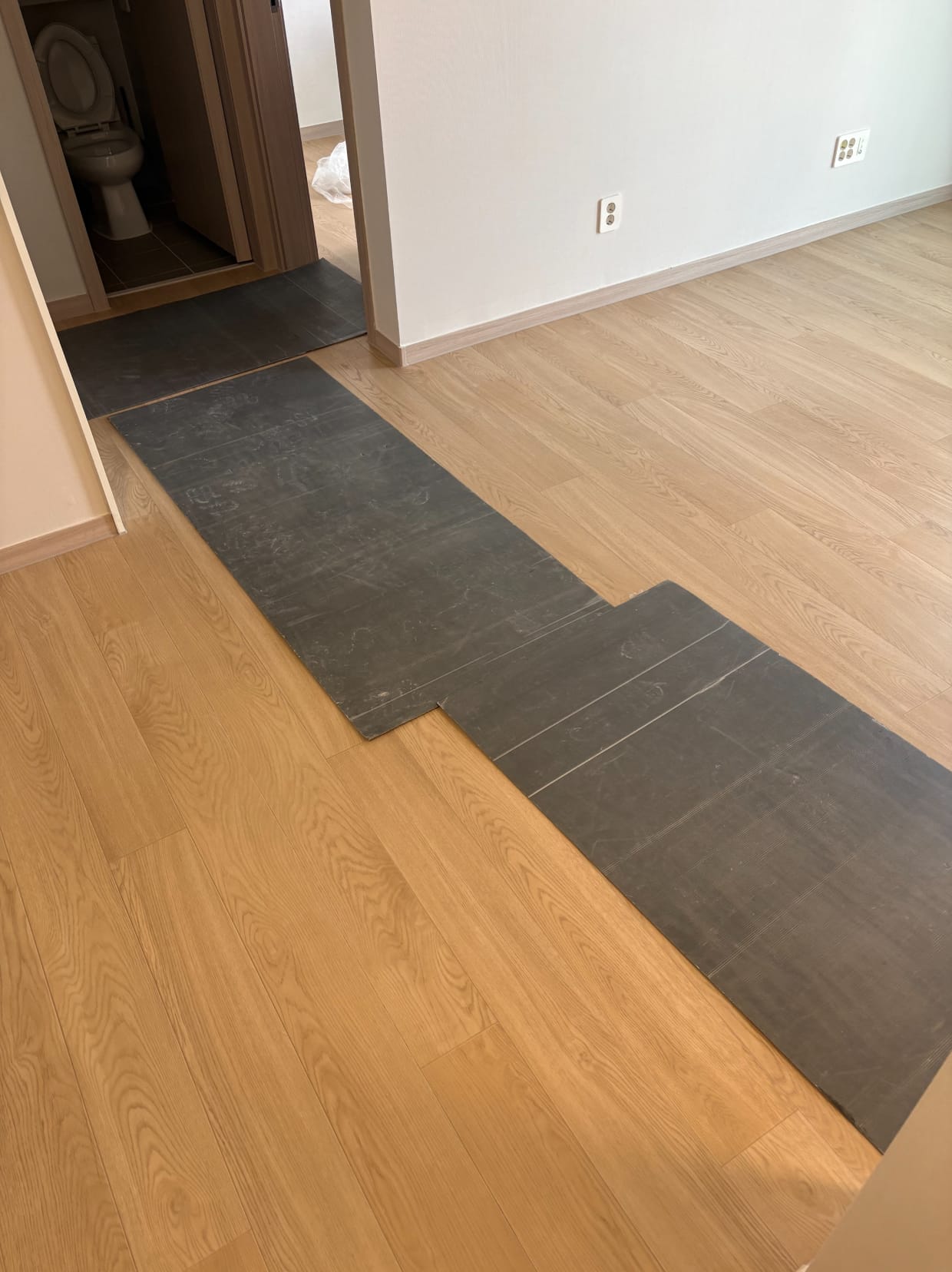
Before the movers started bringing our belongings inside, they protected the new apartment.
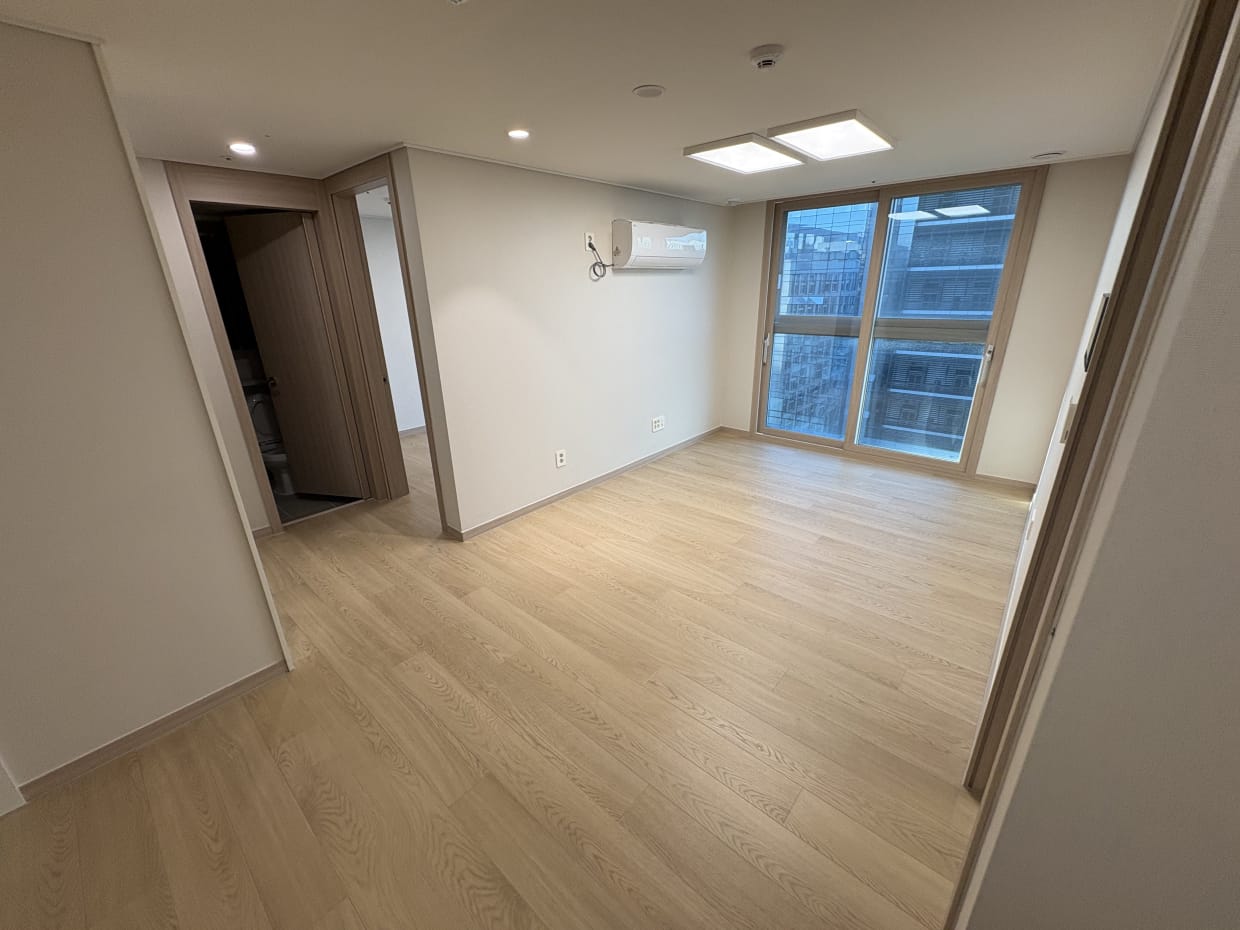
Large protective sheets went down across the floors so that people could repeatedly walk in and out carrying furniture without scratching anything.
Even my shoes got their own protection.
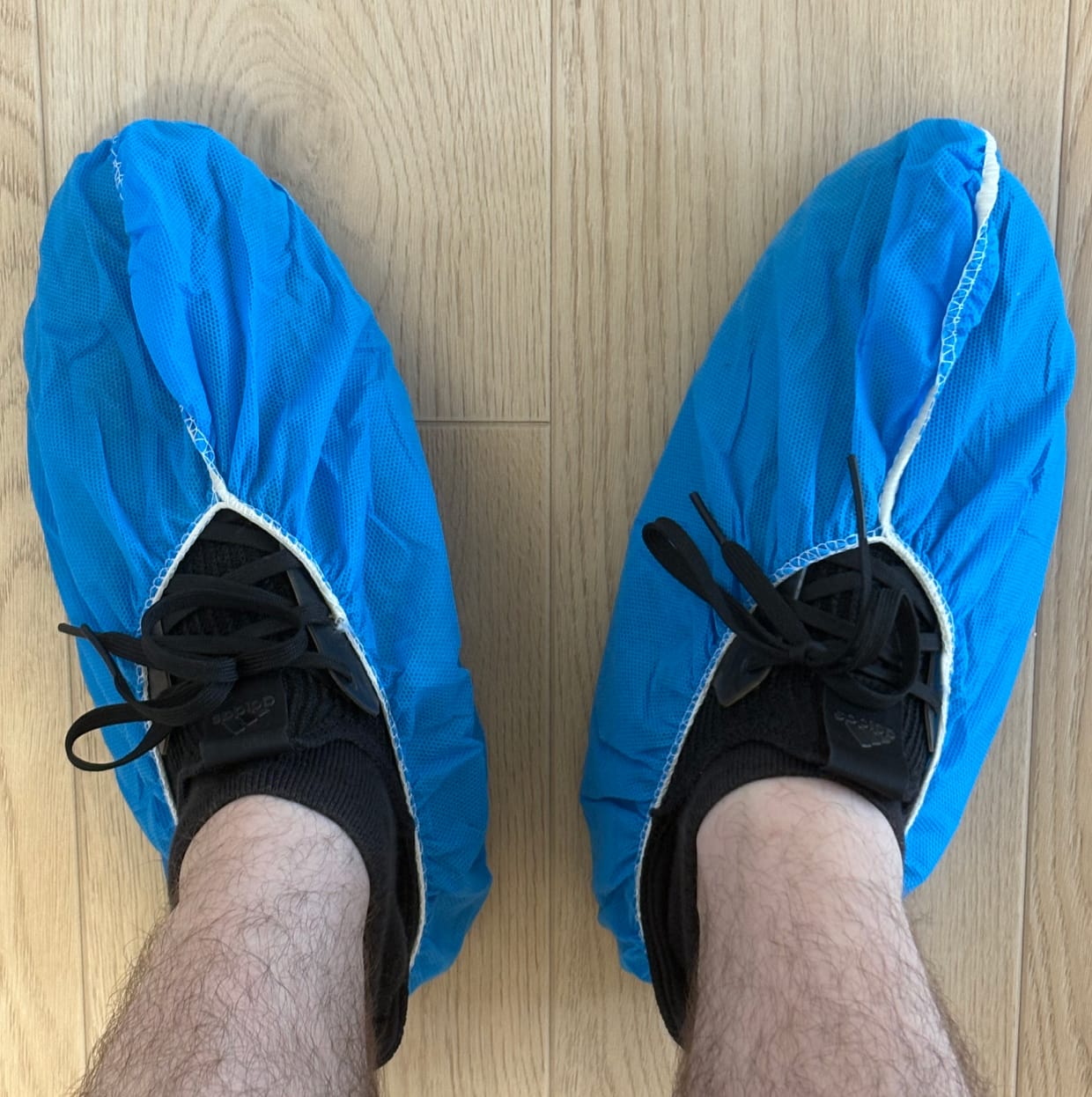
This was another part of the service that reassured me.
There were several people moving large pieces of furniture around a completely empty apartment, but they were clearly taking precautions not just with our belongings, but with the apartment itself.
Then the process basically happened in reverse.
Boxes arrived, furniture came in, closets started filling up again, and what had been a completely empty apartment that morning slowly started looking like somewhere we actually lived.
Then my mother-in-law started putting red beans in the corners
At some point during all of this, I noticed my mother-in-law walking around the new apartment and putting dry red beans in the corners.
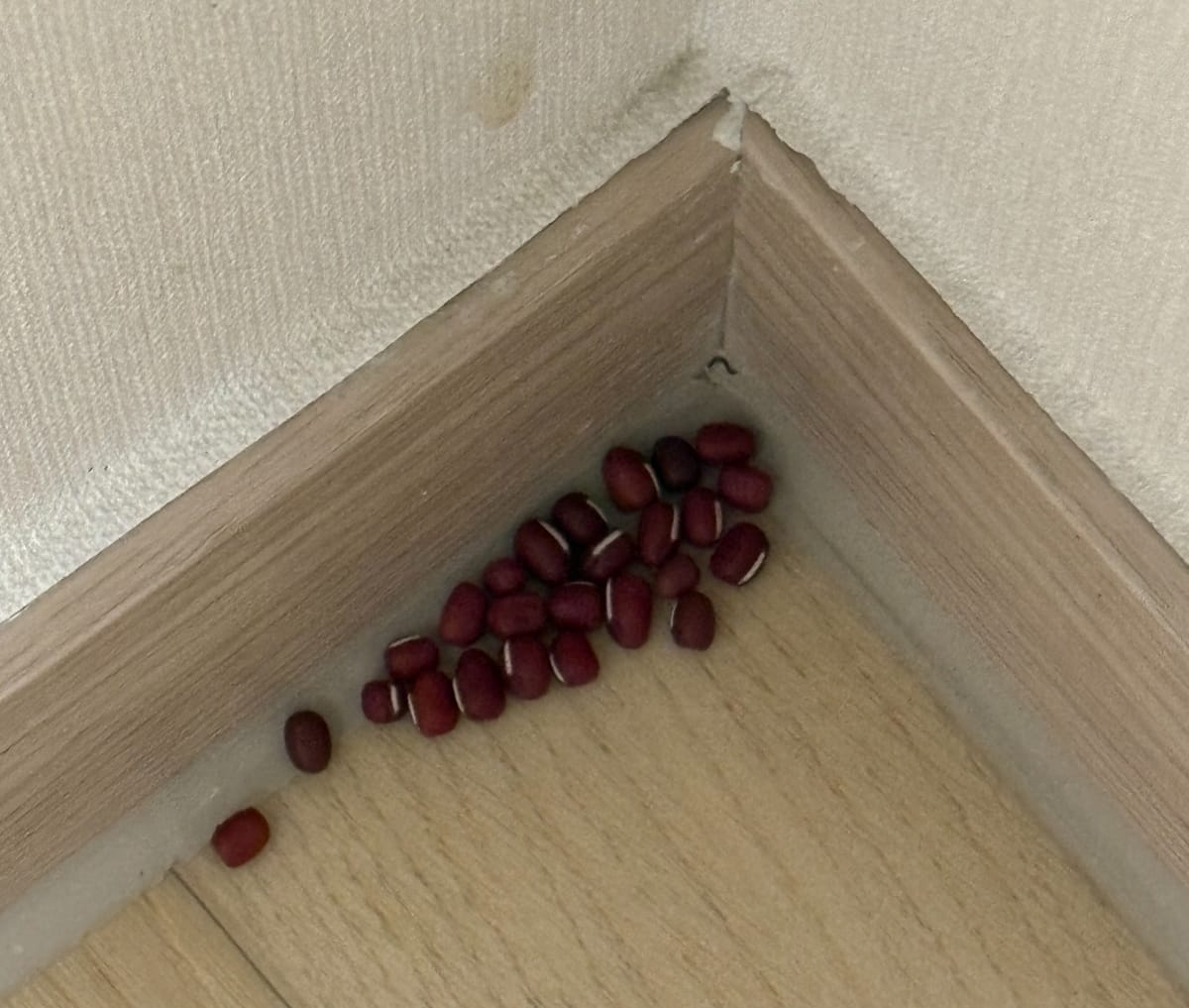
I had absolutely no idea what she was doing.
Apparently, this is connected to an old Korean 액막이 (aengmagi) tradition, customs meant to ward off bad luck and wish for peace and protection in a new home.
Red beans, or 팥 (pat), have traditionally been associated with 벽사 (byeoksa), the idea of driving away harmful or unwanted forces. Their red color was historically linked with vitality and positive energy, and red beans also appear in other Korean folk customs such as eating red-bean porridge around the winter solstice.
There are also moving-related customs involving putting small amounts of red beans or salt around the home, including in rooms or corners.
I found this Korean article explaining the practice, which describes salt as symbolizing purification and protection, while red beans are associated with warding off bad luck.
There doesn't seem to be one strict rule for how this is supposed to be done. The exact timing, amount and placement vary, and plenty of Korean families don't do it at all.
In our case, my mother-in-law simply placed a few dry red beans in the corners of the new apartment.
So apparently our new home now has a permanent +10 defense against bad luck buff.
What do you eat after moving?
Moving day also involved food, naturally.
My in-laws brought us some red-bean bread, which felt particularly appropriate given everything else happening that day.

There's another Korean food I had actually expected to encounter on moving day: 짜장면 (jajangmyeon).
Moving and Korean-Chinese delivery food have a pretty well-known association in Korea. The basic logic makes sense: your kitchen is packed away, the apartment is chaos, everyone is tired, and ordering something quick like jajangmyeon, jjamppong or tangsuyuk is considerably easier than cooking.
We didn't do that.
My in-laws decided we were having 족발 (jokbal) instead.
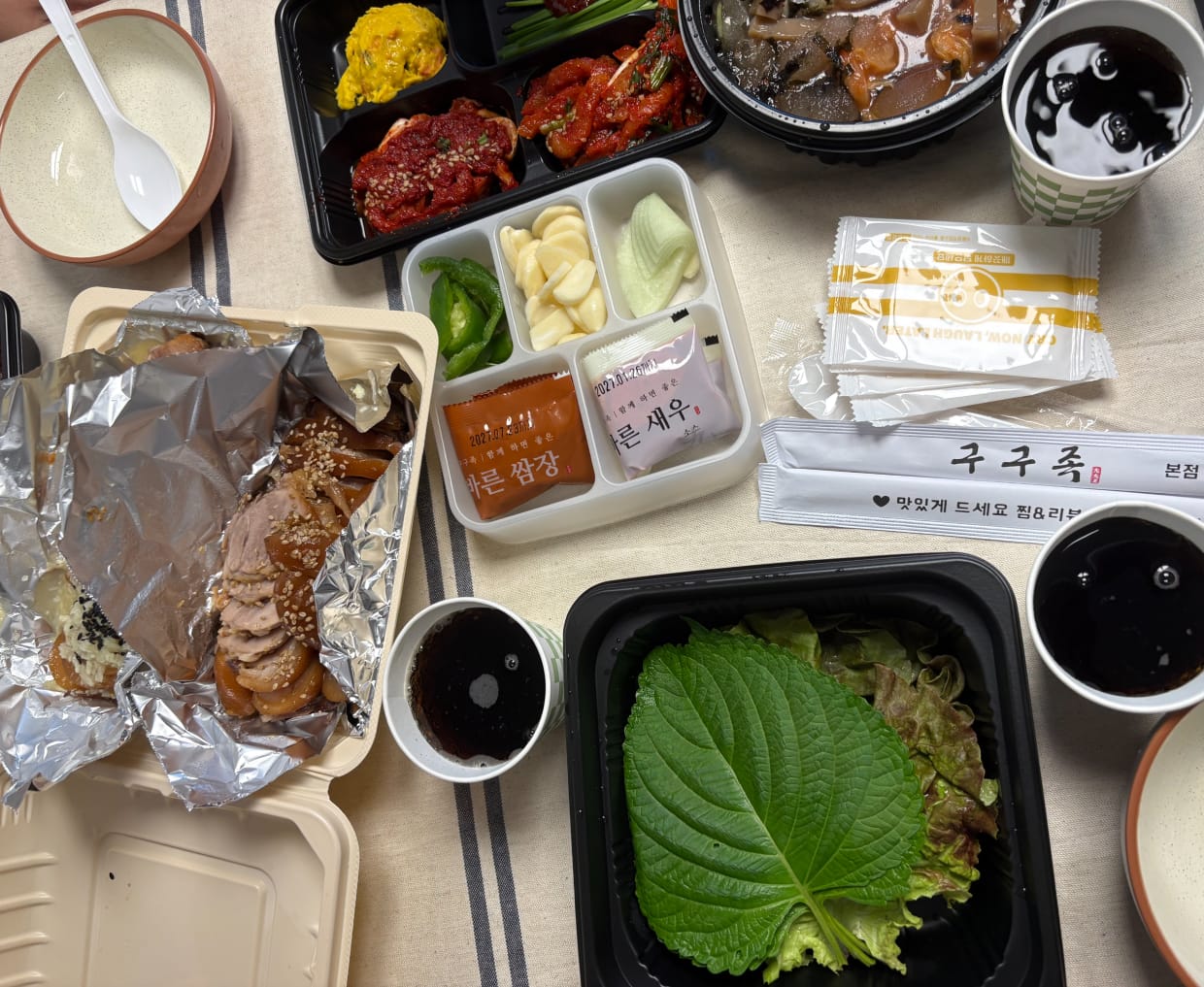
No complaints from me.
After spending the day watching our entire life travel from one apartment to another, sitting around our table in the new place and eating together was a pretty good way to finish the main part of moving day.
The move isn't quite finished when the boxes are unpacked
There is also an administrative part of moving in Korea.
As a registered foreign resident, changing apartments means you need to report your new place of stay, or 체류지 (cheryuji).
We did this by visiting our local 주민센터 (jumin center), the neighborhood community service center.
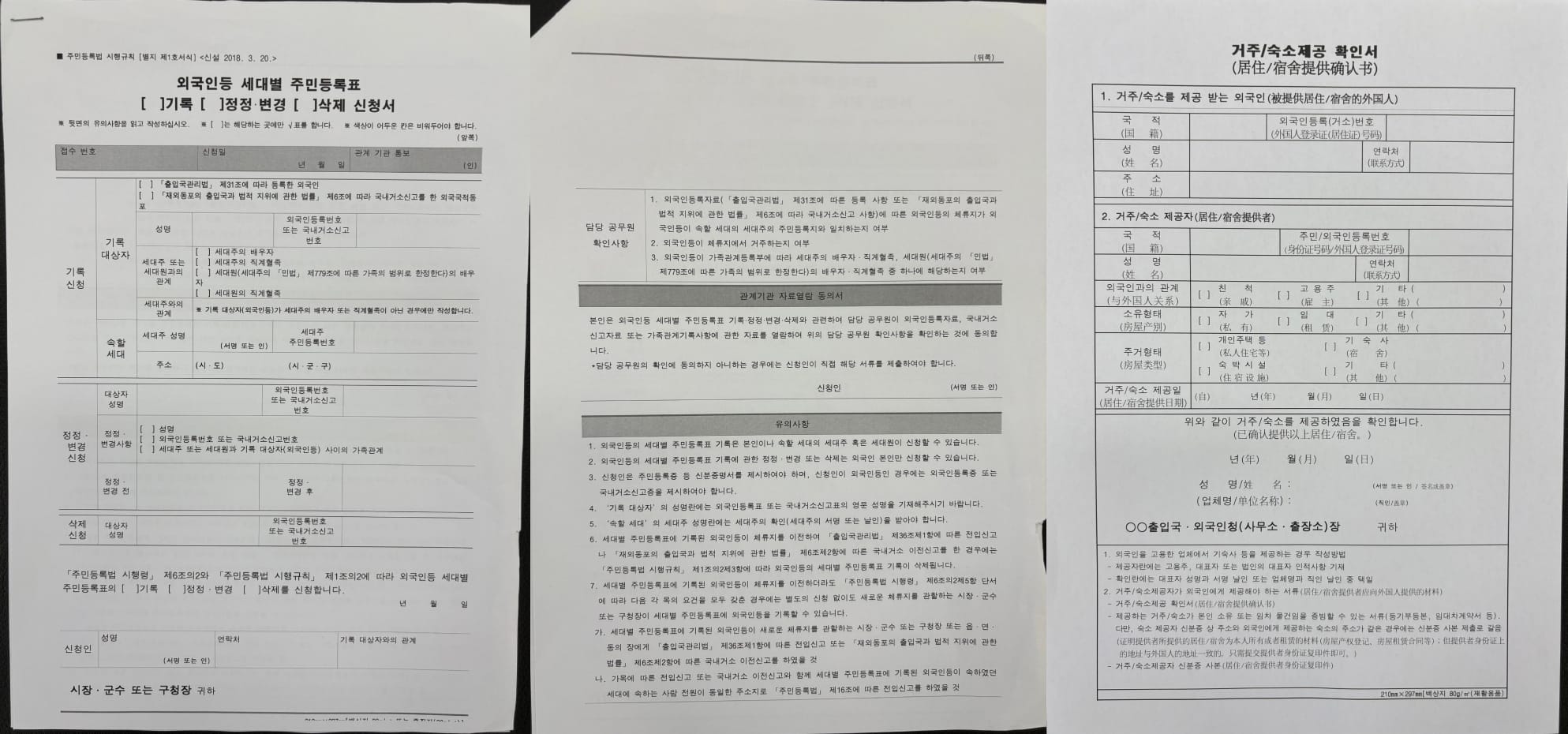
The official Korean government service for foreign residents is called 외국인 체류지변경신고 (oegugin cheryuji byeongyeong singo), or a report of change of place of stay.
Registered foreign residents are required to report the change within 15 days of moving into the new address. The current 15-day deadline has been in effect since December 10, 2020.
My wife, who is Korean, could have handled her address change online.
I tried to do mine online as a foreign resident, but the online process didn't work for me. Since we needed to go to the 주민센터 (jumin center) for mine anyway, we decided to just do both of our address changes there in person.
For me, the in-person process was straightforward.
I brought my Residence Card. I didn't need to show my passport.
The lease agreement itself is in my wife's name, so instead of using a lease with my own name on it, we used the document showing that my wife and I live together to prove that I was also moving into the new apartment.
So if the lease isn't in your own name, that doesn't necessarily mean you can't complete the address change. Depending on your situation, another document showing your relationship to the person on the lease and that you share the same household may work.
There was no fee for the change-of-address report.
You can check the current requirements on the official Government24 page for 외국인 체류지변경신고.
One terminology detail worth knowing is that you'll also hear 전입신고 (jeonip singo) constantly when moving in Korea. That's the standard move-in registration Korean residents deal with. For a registered foreigner, the procedure relevant to your immigration record is technically the 체류지 변경 신고 (cheryuji byeongyeong singo).
If you're moving as a Korean-foreign couple like us, the exact paperwork for each person can be slightly different, but we were able to handle both at the same 주민센터 (jumin center) visit.
So, what was moving in Korea actually like?
The part I expected to be the most annoying was the physical move.
Packing an entire apartment, moving expensive furniture, carrying everything across Seoul and then spending several days surrounded by boxes sounds exhausting.
In reality, 포장이사 (pojang-isa) made that part surprisingly painless.
The moving team packed our belongings carefully, protected our furniture, moved everything using the ladder truck at the old apartment, covered the floors of the new apartment and then unpacked and organized a surprising amount of it for us.
And they did the actual moving work in around five hours.
There was still plenty left for us to organize afterwards, especially those books, but we were already living in something resembling a home by the end of the day.
And around that very efficient moving operation were all these little details I probably wouldn't have thought about before living here:
the 사다리차 (sadaricha) outside the building, protective flooring, red beans quietly appearing in the corners, food with the family afterwards, and a 주민센터 (jumin center) form waiting for us once everything was over.
None of those things individually defines what moving in Korea is like.
But together, they made our moving day feel very Korean.
Now I just need to figure out where all those programming books are going.
Ready for your next move?
Visit Dev Korea to explore the latest job openings at dev-korea.com/jobs, or if you're hiring, post a job at dev-korea.com/post-a-job and connect with our growing international tech community.