


Kubernetes, multi-cluster reality, and local dev that actually works: Dev Korea #6 Recap
이 글은 한국어로도 제공됩니다. 한국어로 읽기 →The January meetup followed a familiar Dev Korea rhythm: food first, conversations early, and talks grounded in real experience rather than theory.
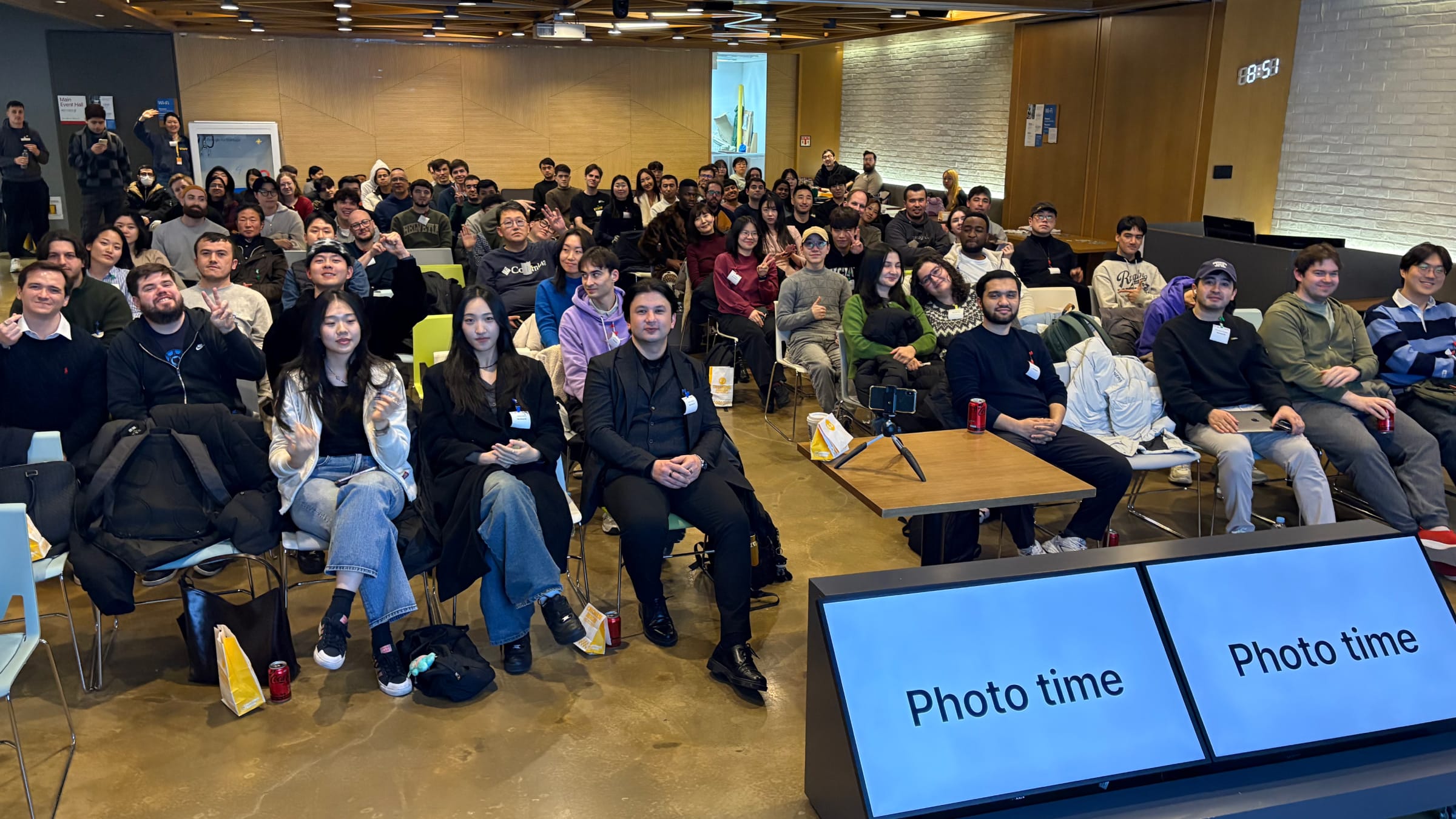
From the moment doors opened, attendees gathered around food, reconnected with familiar faces, and met new people from across the Kubernetes and platform engineering ecosystem. As always, the mix of backgrounds, local and international, junior and senior, individual contributors and founders, made the discussions richer and more grounded.
One reminder we always emphasize, and that clearly resonated again this time:
Don’t worry about perfect English. Many attendees speak Korean too.
Come as you are. We’re here to learn and connect together. 🇰🇷
🧠 How to survive and thrive in a multi-cluster world
The evening opened with a deep dive into one of the most relevant challenges modern teams face.
Ivan Porta explored how organizations are moving away from large, monolithic Kubernetes clusters toward multi-cluster environments, using entire clusters to isolate teams, workloads, or environments.
Rather than treating multi-cluster as a buzzword, the talk focused on practical reality:
- why teams adopt multi-cluster setups in the first place
- how service meshes and GitOps workflows help manage complexity
- the reliability and operational gains that are possible
- trade-offs between multi-cluster and multi-cloud approaches
- how emerging ideas like federated Services fit into the picture

The session resonated strongly with engineers already feeling the limits of single-cluster thinking, and offered a clear mental model for navigating the multi-cluster world without losing control.
🚀 Tilt for local Kubernetes microservices development
Next, the focus shifted from production architecture to the daily reality of development.
Anthony Corbacho tackled a familiar pain point: local Kubernetes development that slowly drifts away from production, leading to "it works on my machine" surprises.
The talk demonstrated how Tilt helps teams:
- run real microservice stacks locally on Kubernetes
- keep the same Kubernetes resources and configuration model as production
- rebuild and redeploy only what changed
- centralize logs, status, and service dependencies in one place
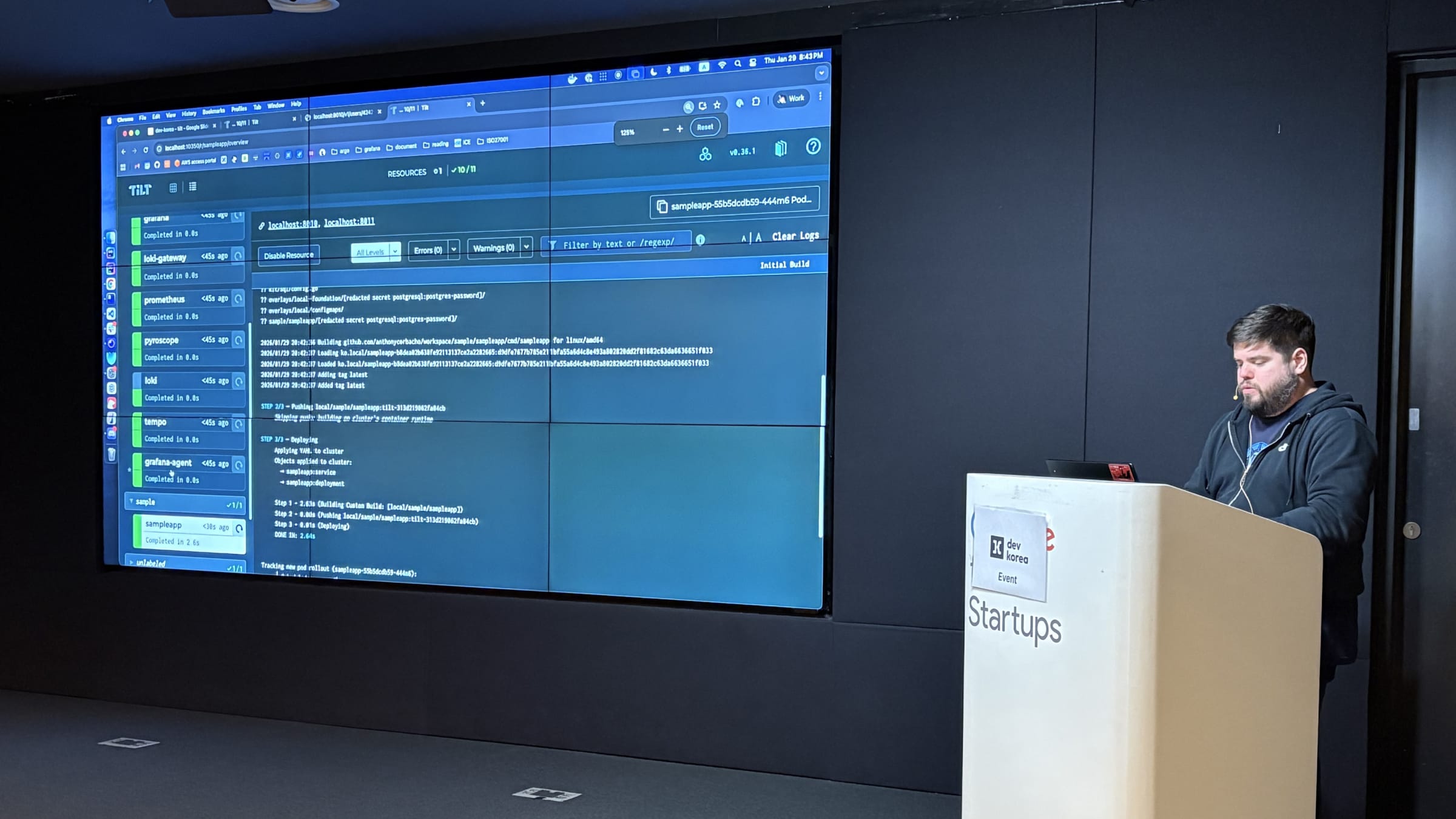
For many attendees, this session connected the dots between developer experience and platform consistency, showing how tooling choices directly affect team velocity and confidence.
🌱 A first infra-focused Dev Korea event
Dev Korea #6 marked an important milestone for us: our very first event fully focused on infrastructure, Kubernetes, and containers.
Until now, most Dev Korea meetups leaned more toward product, startups, and application-level topics. This time, the conversation shifted clearly toward:
- infrastructure and platform engineering challenges
- running Kubernetes in real production environments
- developer experience and tooling for complex systems
- balancing reliability, scalability, and team velocity
For many attendees, it was refreshing to dive deep into infra topics in a community setting that still felt approachable and welcoming. The level of engagement, both during the talks and in the hallway conversations, showed there is strong interest in more infrastructure and cloud focused events within the Dev Korea community.
This first infra-focused meetup set a solid foundation, and it's very likely not the last time we'll explore Kubernetes, containers, and platform engineering together.
🍔 Food, networking, and hallway conversations
Food was served during check-in, setting a relaxed tone from the start and making it easy for conversations to begin naturally.
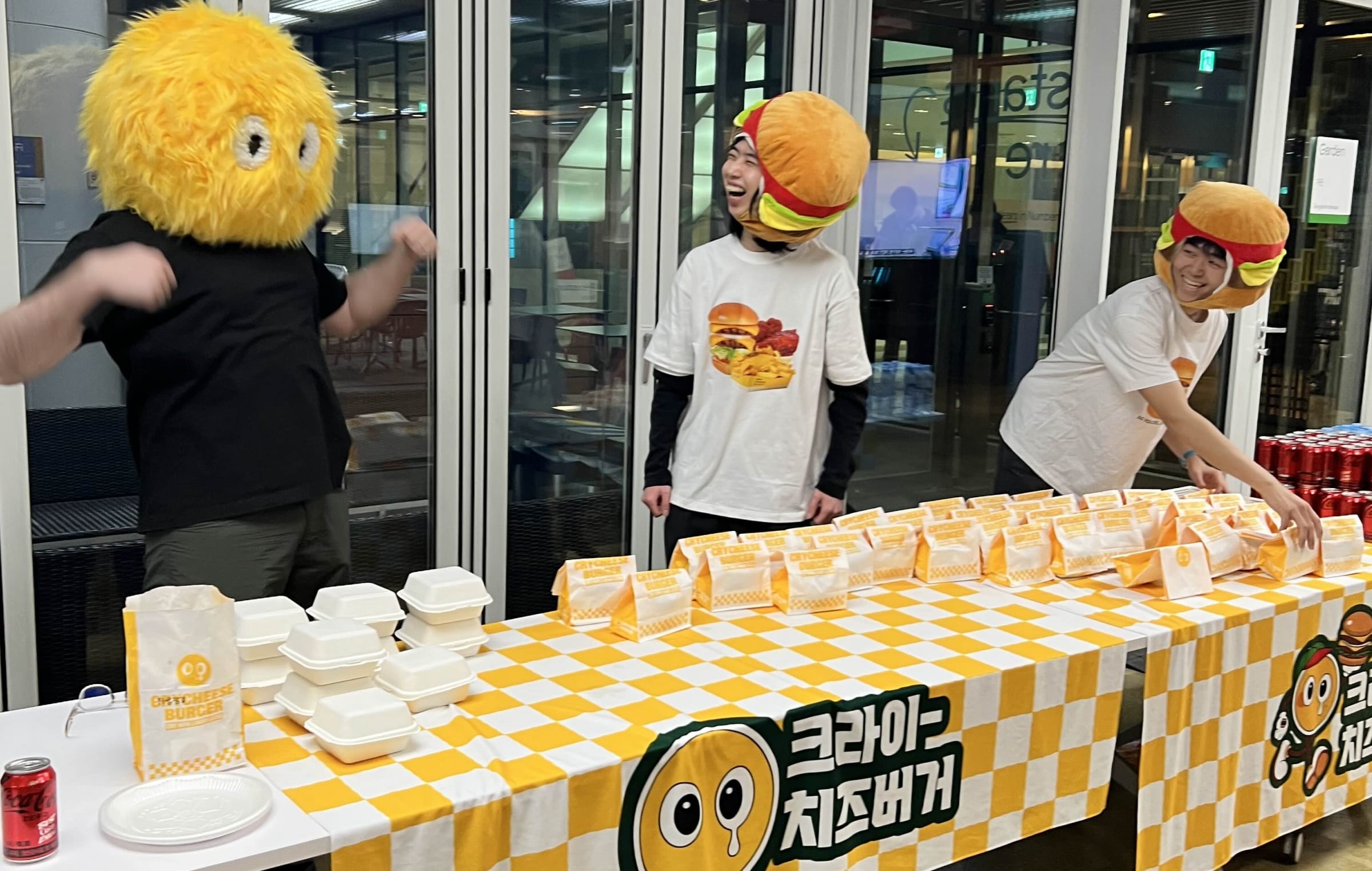
Throughout the night, people:
- exchanged experiences running Kubernetes in production
- compared local development setups
- talked about startups, side projects, and career paths
- made new connections and strengthened existing ones
These informal discussions are always a core part of Dev Korea and often where the most valuable learning happens.
🙌 Huge thanks
This event would not have been possible without:
- Buoyant and Cry Cheeseburger for sponsoring this event
- Our speakers Ivan Porta and Anthony Corbacho for sharing practical, experience-driven insights
- All the volunteers who helped make this event a success: Aaron McCollum, Bertijn Pauwels and Rob Sawyer who made everything flow seamlessly from start to finish
- All the attendees who brought thoughtful questions and great energy
- Everyone who helped make the evening welcoming, smooth, and enjoyable
Seeing engaged conversations continue well after the talks ended is always the best signal that an event worked.
👀 What’s next
Dev Korea continues to grow, and Dev Korea #6 reinforced the demand for practical, technical, community-driven meetups in Seoul.
We’re already preparing upcoming events with global tech companies and local builders—covering real tools, real systems, and real lessons learned.
👉 Explore upcoming events at https://dev-korea.com/events
👉 Watch or rewatch the talks at https://dev-korea.com/talks
Want to stay connected?
- Follow us on LinkedIn: https://www.linkedin.com/company/dev-korea
- Follow us on X: https://x.com/dev_korea
- Join our Discord server: https://discord.gg/hqzMbuXy73
- Subscribe to the Weekly Dev Korea Digest Newsletter: https://dev-korea.com/newsletter
Here’s to more nights of learning, building, and meaningful community in Seoul. 🍻✨
Ready for your next move? Visit Dev Korea to explore the latest job openings at https://dev-korea.com/jobs, or if you’re hiring, post a job at https://dev-korea.com/post-a-job and connect with our growing international tech community.