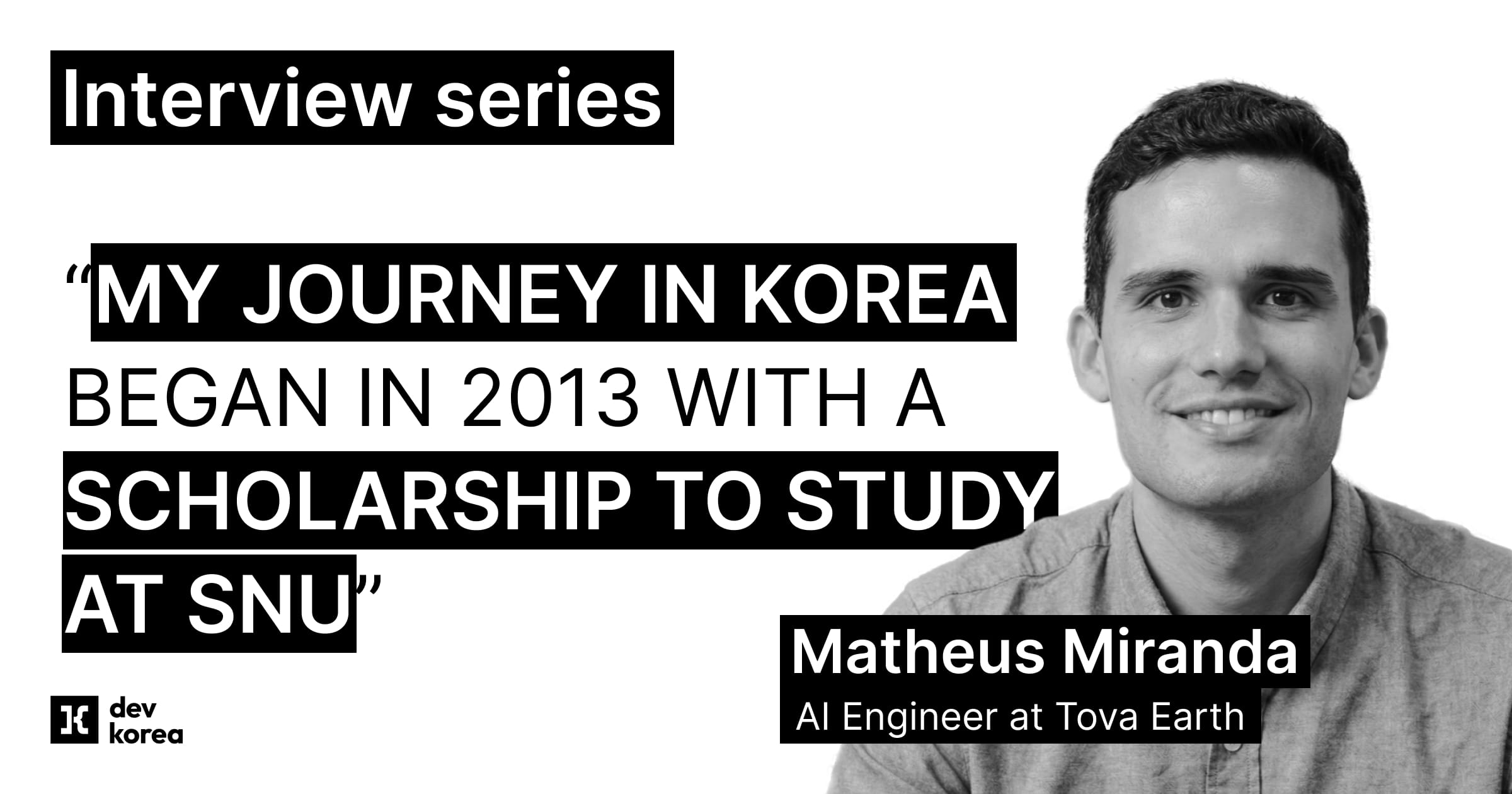
How Matheus built a 10+ year AI career in Korea
이 글은 한국어로도 제공됩니다. 한국어로 읽기 →Meet Matheus, a Brazilian/British AI Engineer at Tova Earth in Seoul. We sat down with him to learn about his journey from Brazil to Korea, what it's like working in tech here, and why he believes more global talent should consider a tech career in Korea.
Profile snapshot
- Name: Matheus Miranda
- Nationality: Brazilian/British
- Current role & company: AI Engineer at Tova Earth
- Years in Korea: 12
- Visa status: F-2 (D-2 -> E7 -> F-2)
- Languages spoken: English, Portuguese, Spanish, Basic Korean
- Previous countries worked in (if any): England
Background & Career
Q. Can you briefly introduce yourself and your current role?
Matheus: My name is Matheus. I'm 36 years old and originally from Brazil.
My story in Korea began in 2013, when I was awarded a scholarship to study my Master's degree in Electrical and Computer Engineering at Seoul National University. Since then, I've had over 10 years of work experience as an engineer in Korea. I'm currently a Senior AI Engineer at a startup called Tova Earth.
Q. What was your career path before moving to Korea?
Interestingly, my entire professional career has been in Korea. Before moving here, the only job I had was as a salesperson at a phone shop during my gap year — not exactly related to my current career path.
Q. What inspired you to work in Korea?
The scholarship was offered by Samsung Electronics, and as part of the package, they included a two-year work contract in a department related to my research topic. That opportunity was extremely attractive to me, as it allowed me to gain early industry experience at one of the most well-known consumer electronics and mobile phone companies in the world.
The Samsung Global Scholarship was a fantastic opportunity overall, and it was the main reason I was excited to come to Korea.
Experience Working in Korea
Q. Tell us briefly about your company (size, industry focus, notable achievements).
Tova is a relatively new startup headquartered between NYC and London (I work remotely from Seoul). It's a small team of eight people, including myself. The company focuses on leveraging deep learning and other AI technologies for water risk management.
Our main customer segments include water utility companies and private-sector companies in food and beverage, which require large volumes of water for operations. Tova has participated in the Techstars London accelerator, raised angel funding, and has paying customers, including a water utility company in California.
My role involves designing and deploying AI systems.
Q. How did you find your current job? Was the hiring process challenging as a foreigner?
I generally use LinkedIn, Dev Korea, and other remote job boards to discover open positions. In this case, however, I was contacted directly by the CEO of Tova. We previously worked together on a summer volunteering project in Peru during our undergraduate studies in London.
The hiring process was fairly informal and based largely on trust and past accomplishments. Since the company is international and remote-first, there were no specific challenges related to being based in Korea.
Q. Can you describe your typical workday?
My day involves coding with Claude Code, evaluating and monitoring agent performance, and deploying systems on AWS.
I typically take a break in the afternoon to go to the gym and have dinner, then work again in the evening so I can overlap with team members in the UK and US time zones.
Q. How does Korean work culture compare to your home country's?
Since I have limited experience working in Brazil or the UK, I may not be the best person to make a full comparison. However, I did get a glimpse of the UK work culture while participating in the Techstars London accelerator with one of my startups (yes, I was a co-founder at two startups).
In my experience, UK work culture encourages creativity and open expression of ideas, regardless of title or seniority. Professional criticism is often viewed positively and contributes to constructive discussion.
In Korea, hierarchical culture is strongly present in many companies. There is often a strong emphasis on following instructions and working long hours. Of course, this doesn't apply to every Korean company, but it is a pattern I have observed.
I was surprised by the speed at which things move in the Korean tech sector, especially in smaller companies. It’s a very dynamic work environment that keeps adapting to new trends.
Q. Do you speak Korean at work? How is communication handled in your team?
I have never spoken Korean at work. Even during my time at Samsung, I was encouraged to use English to help colleagues practice and to support Samsung's vision of becoming a global company.
Q. What challenges have you faced adapting to Korea's work environment?
The communication hierarchy can be frustrating, as it sometimes slows productivity. I once had to start a long email chain to request information from someone sitting just two desks away, because direct communication wasn't considered appropriate.
I have also experienced a strong sense of 눈치 (nunchi), which sometimes prevented me from expressing my opinions openly. Finally, the "ppalli-ppalli" culture can lead to rushed decision-making without sufficient discussion or alignment.
Lifestyle & Community
Q. What's your life outside of work like? How have you built your social life here?
I've been fortunate to build strong friendships since arriving in Korea in 2013. Although people come and go, I managed to keep a good friendship with people I met during my time at Samsung and every company since, as well as other "Korea OGs" that I met along the way.
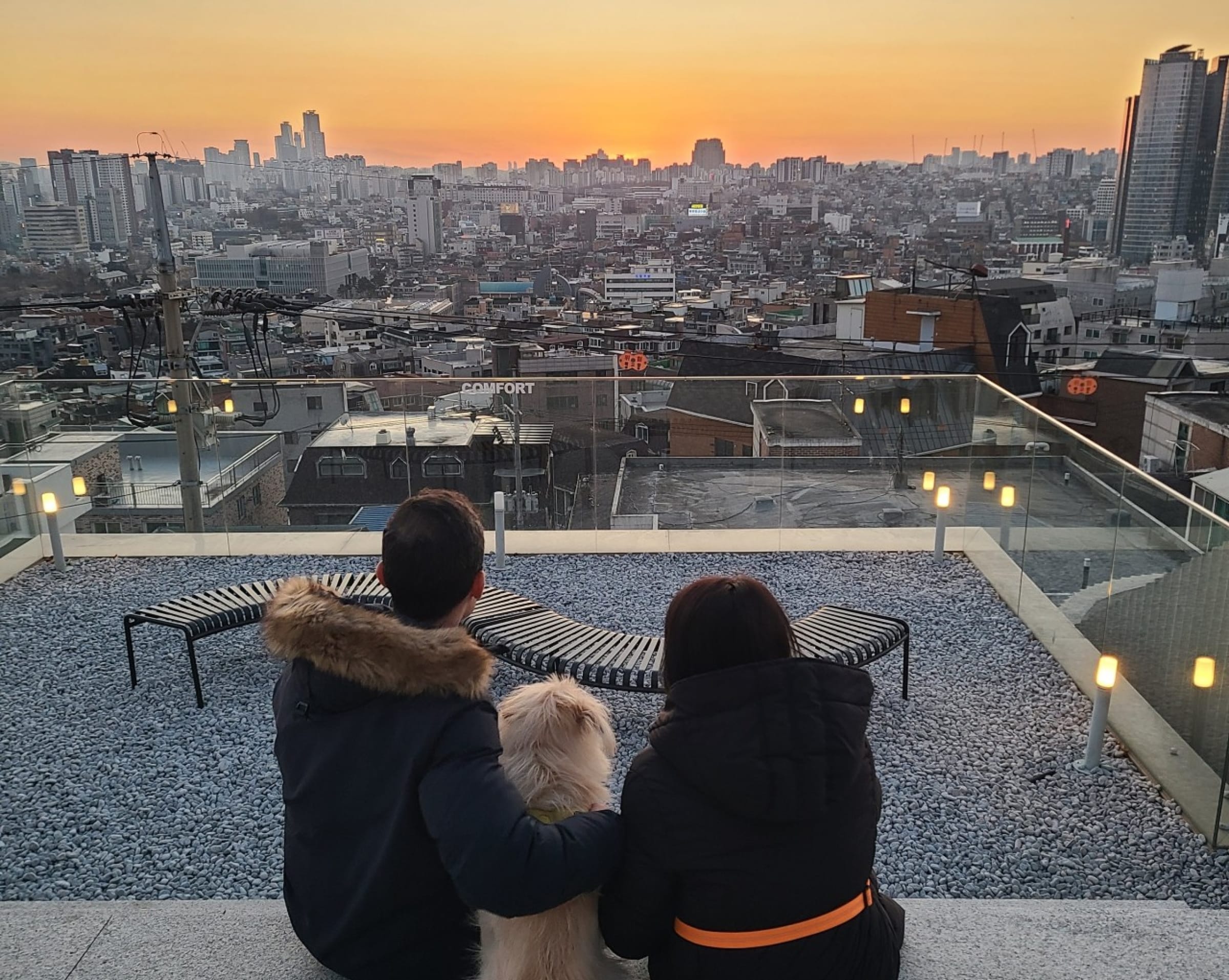
Outside of work, I enjoy outdoor activities with my fiancée, my dog, and friends. We also like hosting dinners at home and organizing group outings. Personally, I enjoy cooking and photography.
Q. How much has knowing Korean (or learning it) helped in your daily life?
If my Korean were better, it would help tremendously. Being able to have deeper conversations with neighbors and colleagues significantly improves quality of life and helps you feel more integrated into the community.
Q. What was your biggest culture shock when you first arrived?
One shock was how readily people said "yes" to their superiors.
Another memorable moment happened during my time as a student at SNU. My labmates expected everyone to remain in the research lab from 9 a.m. to 5 p.m., unless attending class. They told me that as long as I followed this norm, they would support me whenever needed.
One afternoon, while preparing for an exam, I decided to study at the library instead. The next day, senior PhD students pulled me aside to express their disappointment that I had left the lab without notifying them. That experience taught me a lot about expectations within group settings.
Reflections & Advice
Q. Do you plan to stay in Korea long-term, and how do you see your career evolving here?
I can certainly see my career continuing to evolve in Korea. I’ve recently started taking Korean language classes again so that I’ll be better prepared in case I decide to work for a Korean company in the future.
At the moment, I’m very happy working remotely while living in Seoul, and I can see myself continuing this lifestyle for quite some time.
Q. What tips would you give to someone searching for a tech job in Korea?
Pay attention to hiring cycles and prepare thoroughly for technical tests. Research each company carefully to understand what types of questions they might ask, and prepare strong answers for the specific role.
Q. What can Korean companies do to better support and integrate international employees?
Reduce communication barriers related to rank and age. Provide clear onboarding about Korean culture for international employees, keeping in mind that things that feel natural to Koreans can be confusing or unintuitive for outsiders.
Q. What's one thing you wish you knew before moving here?
The importance of deeply understanding the culture beforehand, so that I could have been better prepared to navigate the work environment and integrate into society more smoothly.
Q. Would you recommend Korea to other international tech professionals, and why?
Yes, in Korea you will meet highly talented colleagues, and be involved with cutting-edge technologies. For those open to adapting to cultural differences, it can be a very rewarding experience both professionally and personally.
Rapid Fire
- Favorite Korean food: Charcoal-grilled dakgalbi (숯불 닭갈비)
- One must-visit place in Korea: Han River (한강)
- Most surprising thing about Korean tech culture: People are very intelligent and kind
- Favorite Korean word or phrase: 화이팅 (Hwaiting meaning "Good luck," "You can do it," or "Fighting!")
Connect with Matheus
- LinkedIn: /in/matheus-f-miranda
If you want to be next and contribute, send us an email at [email protected].
Ready to explore your next move? Visit Dev Korea to check the latest job openings, or if you're an employer, post a job and connect with our vibrant community of tech talent eager to contribute to Korea's innovation ecosystem.