



Inside Dev Korea #11 with AI Salon: going viral, seven pivots, and Korea's first AI Salon
이 글은 한국어로도 제공됩니다. 한국어로 읽기 →Want to feel what the night was like? From the talks to the networking and everything in between, here's a quick aftermovie of Dev Korea #11 🎥.
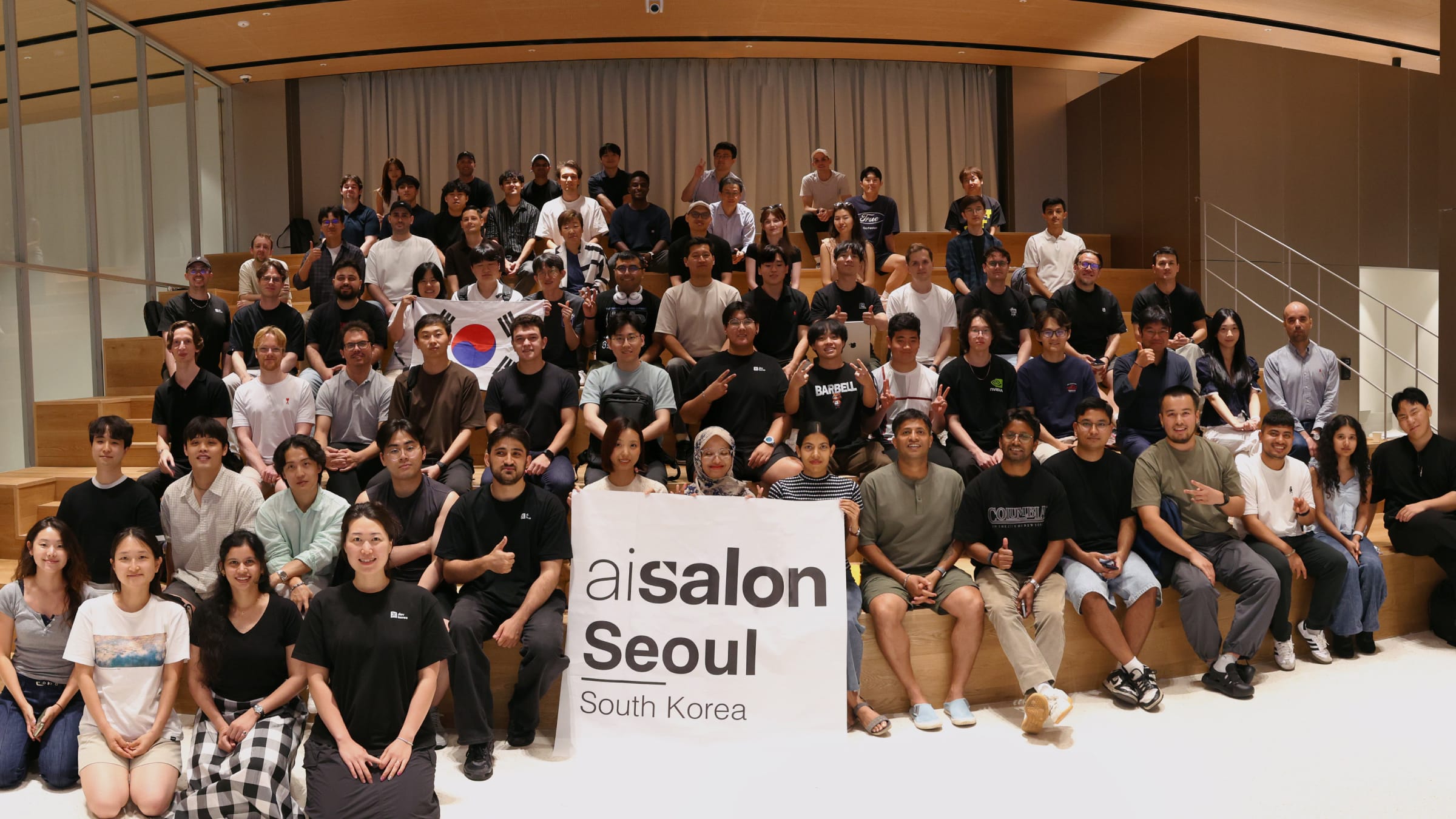
On July 29 we ran Dev Korea #11 together with AI Salon Seoul and SVC Seoul. More than 90 people came out. It was the first AI Salon chapter event in Korea, which made for a room heavier on founders than usual.
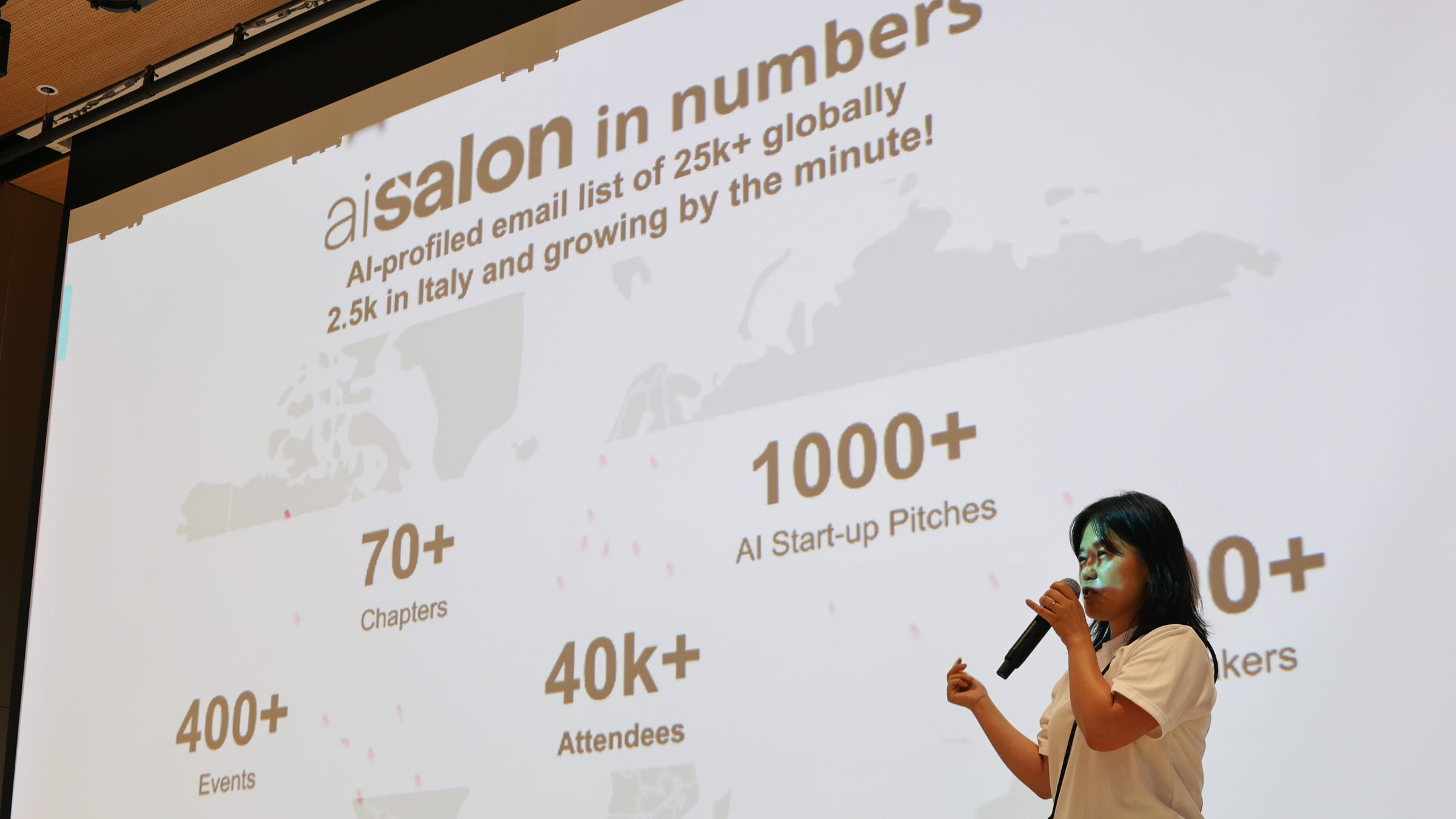
Two talks, both from people who had gone through the same thing from different angles: how do you get anyone to care about the thing you built.
Food was gimbap this time, served at check-in, which is where the first conversations always start.

Nobody owes your product attention
Cailyn Yong opened. She started 10X AI Club, an AI community in Korea that grew to 33K YouTube subscribers and an 800 member group chat, then founded Momo, a memory infrastructure product for AI agents. Her demo videos on X pulled 200K+ impressions each and brought in 600 users in a day. She raised her angel round off the back of them.
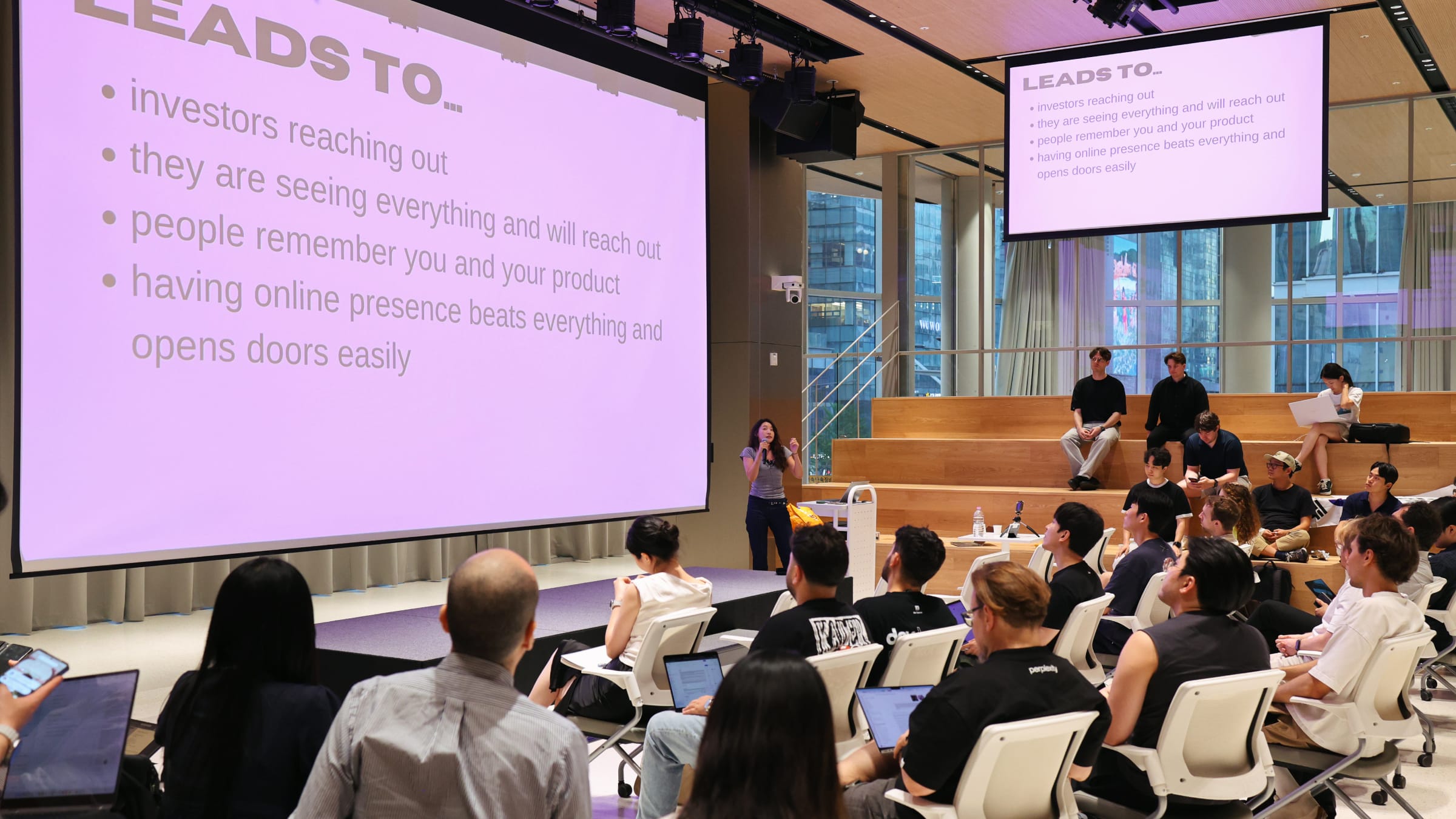
Her opening argument was blunt: anyone can build anything now. That means the product isn't the moat. The reason someone picks yours out of a dozen identical ones is you, which makes your story the defensible part.
The practical half of the talk was a teardown of her own demo videos, which she learned from a video producer at Founders, Inc.
- Keep it under a minute. Two minutes and nobody finishes it, including you.
- One second for a hook. Something visually odd enough to stop a scroll.
- Five seconds for a one-liner. Three or four words that explain the product.
- Then the problem statement, then straight into the demo. Don't explain what you built, show it.
- One feature per video. Three features means three videos, not one crowded one.
- End with the name in a font big enough to be annoying.
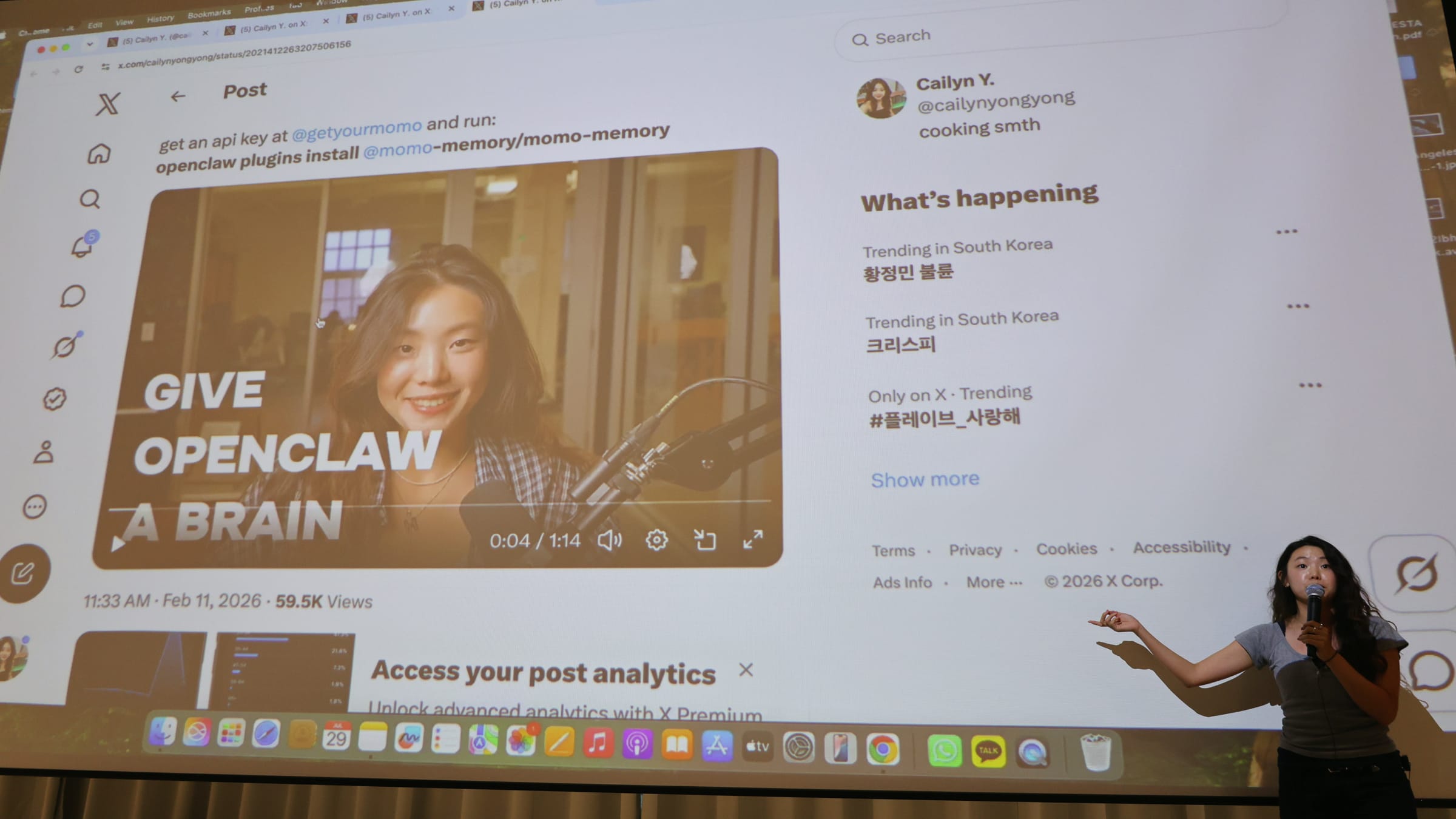
Her framing for the demo itself was the part people wrote down: play your ICP. In one video she acted as a CEO who couldn't keep track of what her team was doing, and walked through the product from inside that problem. It's more convincing than describing the problem from the outside, because it proves you understand it.
On going viral, she was direct that it isn't luck and it isn't one post. Warm up the account. Post whether or not anyone is watching. Then study the accounts already winning in your space. In memory infrastructure that meant Supermemory and Hypernotes: she read through what they'd posted, worked out which ones landed, and reused the templates. Eventually one of yours breaks through, you won't know which, and that's your first thousand followers.
She also drew a line under rage bait. She'd seen it work and told the room not to do it, because people remember what kind of person you were on the way up.
One last observation that surprised the room: X brings volume, YouTube brings quality. Her highest-retention users came from long-form video, because sitting through twenty minutes is a filter.
Seven pivots
Jun Kim followed with the story of getting to Aside, an AI browser that works across sites you're already logged into. It launched a month before the event and did 2.5 million views and 20K users in its first week.
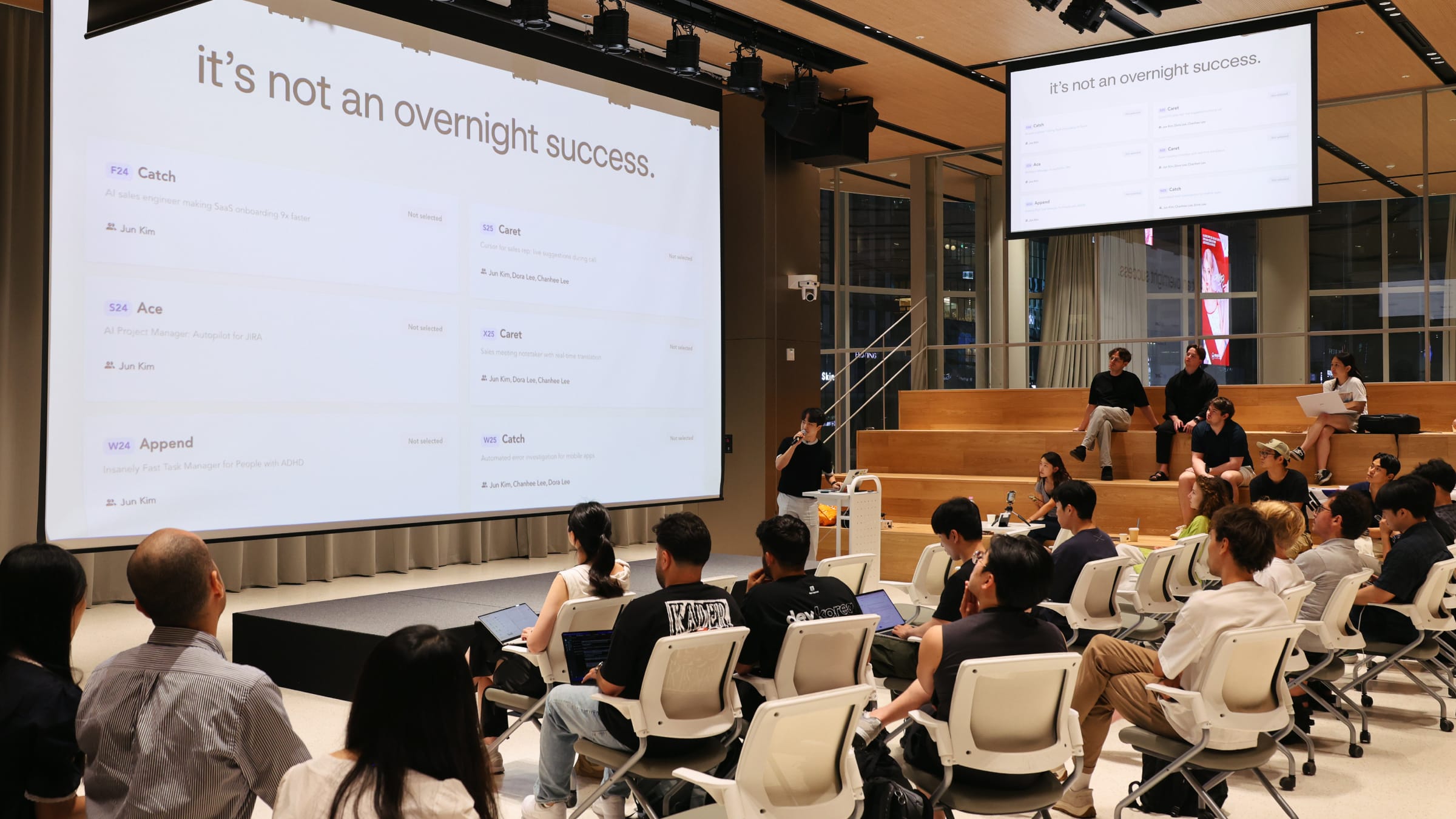
Then he put up the slide that set the tone: six YC rejections before the seventh application got in.
The tour through the pivots was honest in a way these talks usually aren't. An AI executive assistant they built for months and killed without ever launching, because they lost conviction. An AI project manager that fell over in San Francisco partly because "project manager" doesn't mean one specific job there the way it does in Korea. An AI coding agent for SDK instrumentation. An error investigation tool that got them US user interviews and no customers.
Then Caret, a note taker with live translation, built by his co-founder over his objection that the space was too crowded. It made $2,000, which was more than the company had earned in all of 2024. It went viral in Korea. And it got them a YC interview that ended on one question: where's your revenue from? Ninety percent Korea. That was the rejection.
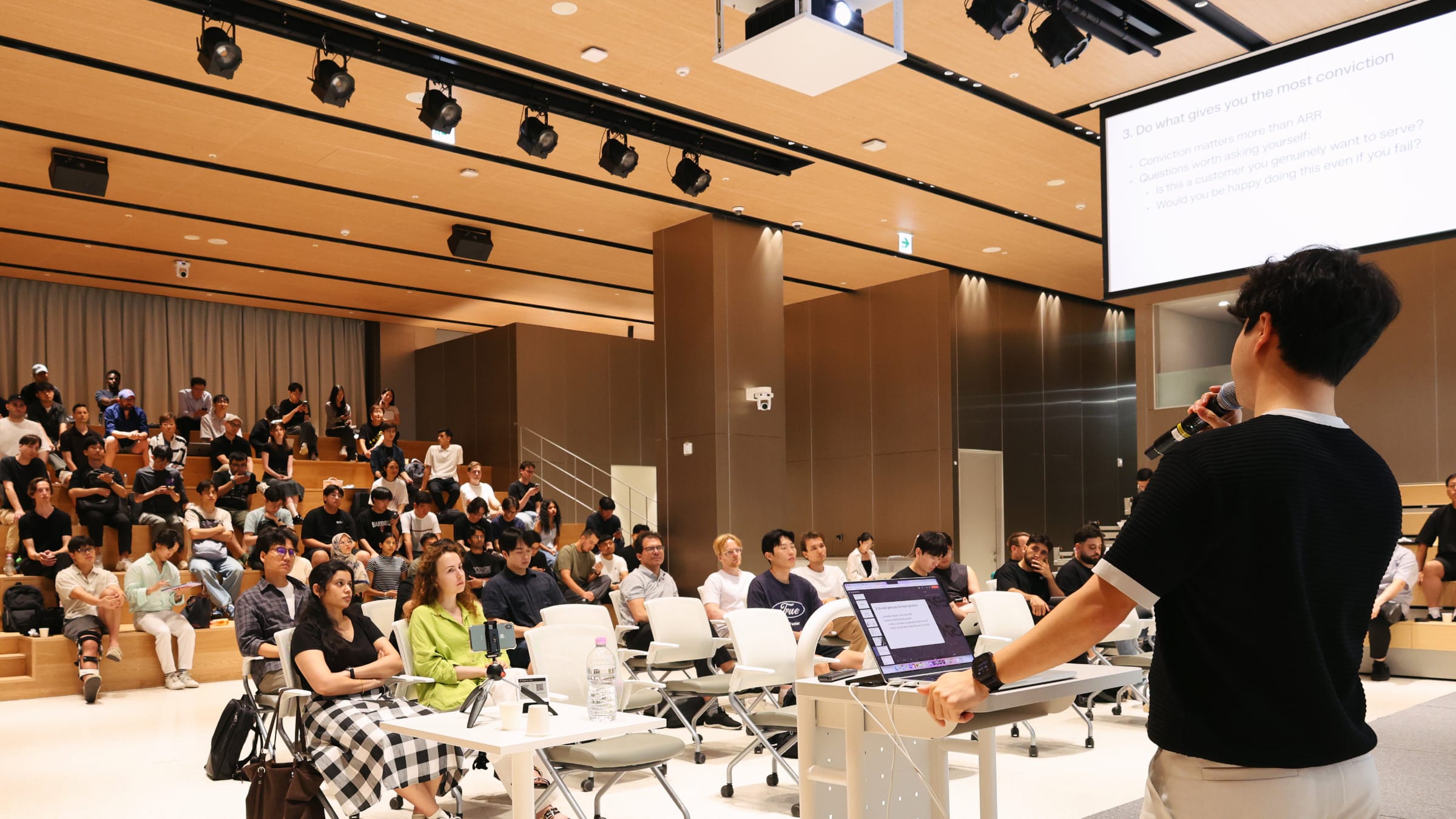
The three lessons he closed on:
Look for overlooked problems. He asked the room what problem Spotify solved in 2006. Someone said music streaming. His answer was that downloading music over torrents was slow and full of viruses. Good problems look too small to be worth solving right up until you notice they're the bottleneck.
Users don't know what they want. His fix was shortening the feedback loop rather than running more interviews. On Aside the team is its own ICP, which breaks a startup rule but takes iteration from weeks to hours. For B2B, he argued your first five design partners set your product direction, so getting five Korean enterprises when you want to sell in the US is worse than useless.
Conviction matters more than ARR. They found something that looked like product-market fit in sales assistance and lost their energy anyway, because they didn't care about the customer. His two questions: is this a customer you want to serve, and would you be happy doing this even if it fails?
Every pivot had an exit condition set in advance. Ten active customers in three months. $50,000 ARR. Ship in two weeks or stop. That's what let them move fast without it feeling like giving up each time.
Q&A
The Q&A ran until we had to cut it for networking, which is the good version of running out of time.
Somebody asked about naming, given that the company had cycled through Append, Ace, Caret and Aside. Jun's rule was that names start with A, for alphabetical ordering, and that the real constraint was always the price of the .com.
Someone else asked how they survived two years financially. Three co-founders and one teammate, no salaries, and the company account nearly empty before YC. Staying small is what bought the runway.
There were good questions on security, on whether people will still use browsers in thirty years, and on whether acquisition is the exit plan. That last one got the best laugh of the night: nobody had reached out yet, but he hoped they would.
The room
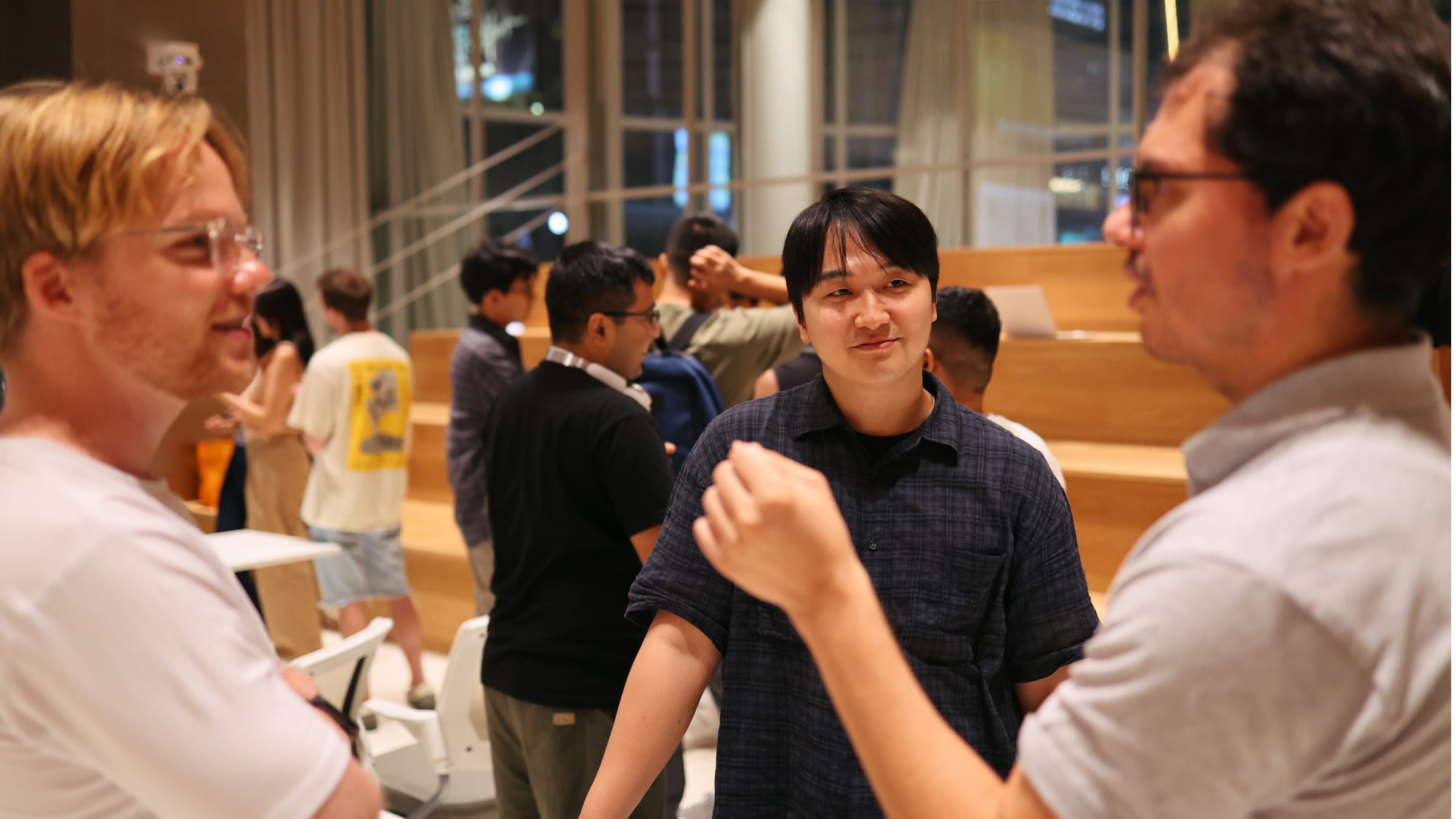
The Q&A ran so long we had to drop the open mic, which felt like the right trade. People pitched to each other during networking instead.
Huge thanks
This event wouldn't have happened without:
- Cailyn Yong and Jun Kim for two talks that were unusually specific about what didn't work
- Jay Kim and AI Salon Seoul for bringing the first chapter event to Korea
- Lucy and SVC Seoul for hosting us
- The volunteers who kept the night running: Bertijn, Brian, Nathaniel, Oscar, Serin, and Sonali
- And everyone who showed up, asked questions, and stayed to talk
Watch the talks
Both talks are online:
- How to go viral on X and build your community, by Cailyn Yong
- 7 pivots to build something people want, by Jun Kim
You can find every published Dev Korea talk on our talks page.
See you at the next one.
Ready for your next move?
Visit Dev Korea to explore the latest job openings at dev-korea.com/jobs, or if you're hiring, post a job at dev-korea.com/post-a-job and connect with our growing international tech community.