



Interview fearlessly: a night of practicing out loud in Seoul
이 글은 한국어로도 제공됩니다. 한국어로 읽기 →Want to feel what the night was like? From the workshop to the networking and everything in between, here's a quick aftermovie of Dev Korea #12 🎥.
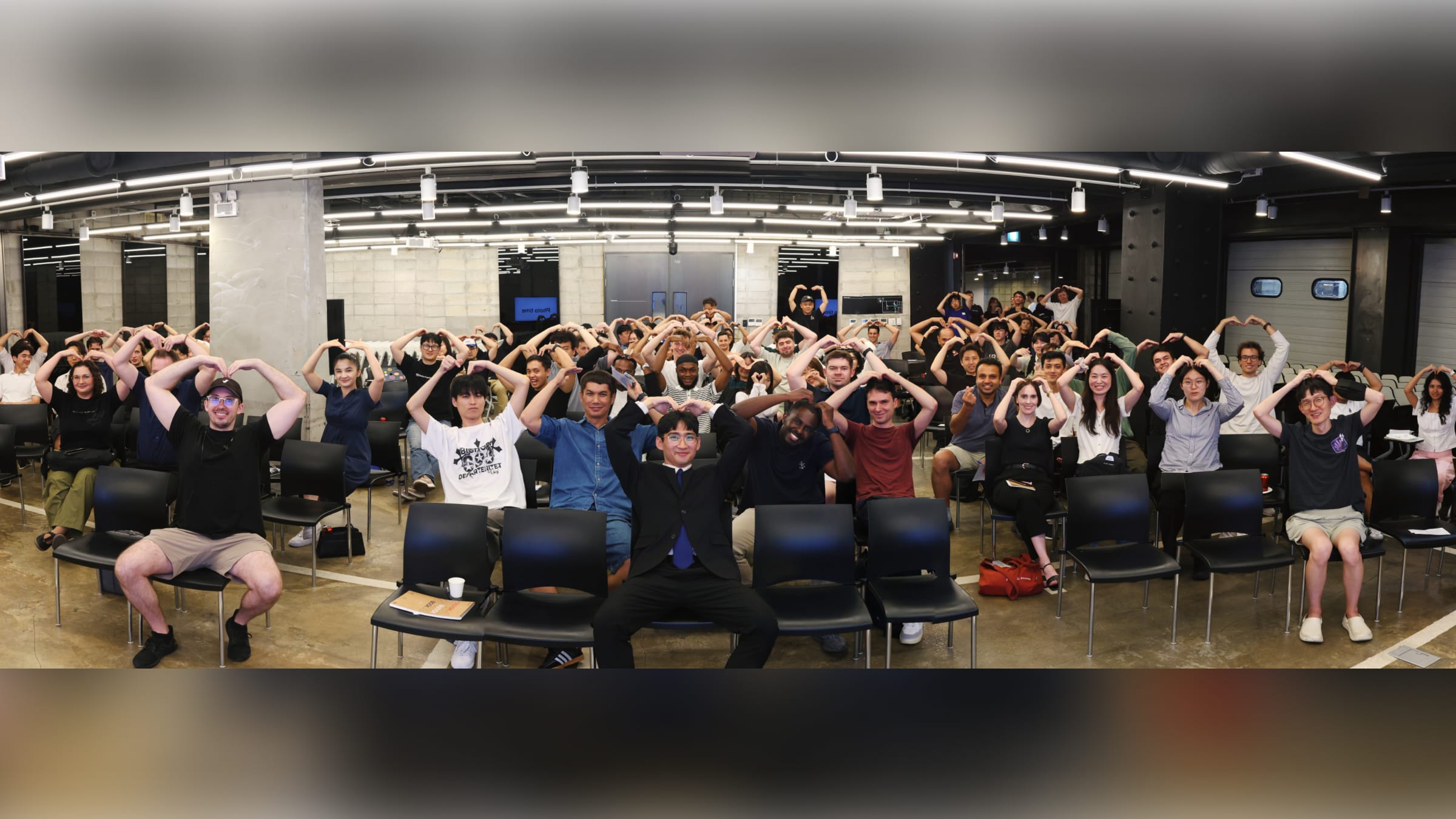
On August 11 we ran Dev Korea #12 at MARU. About 100 people came out.
This was our first proper workshop. Not a talk with questions at the end, but an hour where people spent most of the time practicing with each other. The topic was communicating clearly under pressure, aimed at interviews but useful for anyone who has to explain their work to a customer, a stakeholder, or a room.
Minson Vo told me upfront that he wanted people participating, not listening. I was nervous about it. Getting a room of developers to turn to a stranger and practice out loud is not a guaranteed win.
It went better than any of us expected. Everyone played along.
The premise
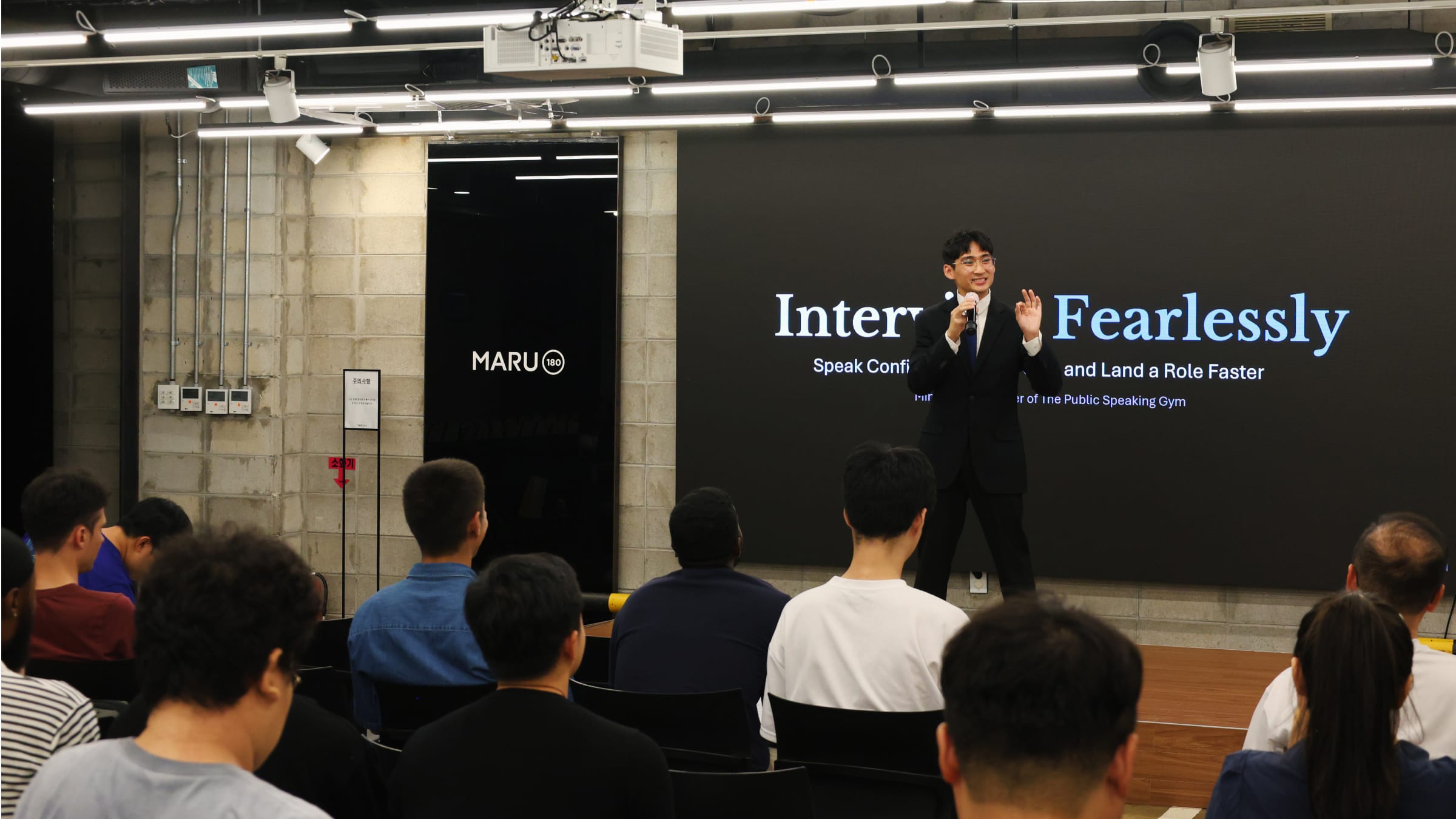
Minson has spent six years coaching engineers, analysts and PMs on communication, including at Microsoft and ThoughtWorks.
He opened with a friend back in Texas who had done more than 30 interviews in a few months. Every week a good one, every week a rejection a few days later. Not because he lacked skills. The point Minson built on it: most strong candidates don't lose interviews on ability, they lose because they over-explain, lose the thread under pressure, and don't sound like the senior person they are.
Tone and body language
The first half was delivery, and the single sharpest idea in it was inflection.
An upward inflection at the end of a sentence sounds uncertain and approval-seeking. A downward one sounds settled. He demonstrated the same self-introduction both ways and the difference was uncomfortable to hear. His target: land on a downward inflection about 80 percent of the time. Not always, or you sound grim.
On body language, the things research links to better interview scores are unglamorous. Eye contact. Nodding and reacting while the other person is still talking, rather than staring blankly to signal you're processing. Visible, moving hands.
He made a specific point about eye contact that landed with this room in particular. When people speak to someone they read as higher status or older, they look away more than the other person does. It's a deference habit, and it's stronger in Korean and other Asian cultures. It's also read as low confidence in an interview. Notice it and you've fixed one dimension for free.
Then everyone paired up. One person asked a question and practiced nodding and reacting; the other answered and practiced using their hands. Then they swapped. His disclaimer before starting: if this feels awkward, you're doing it right.
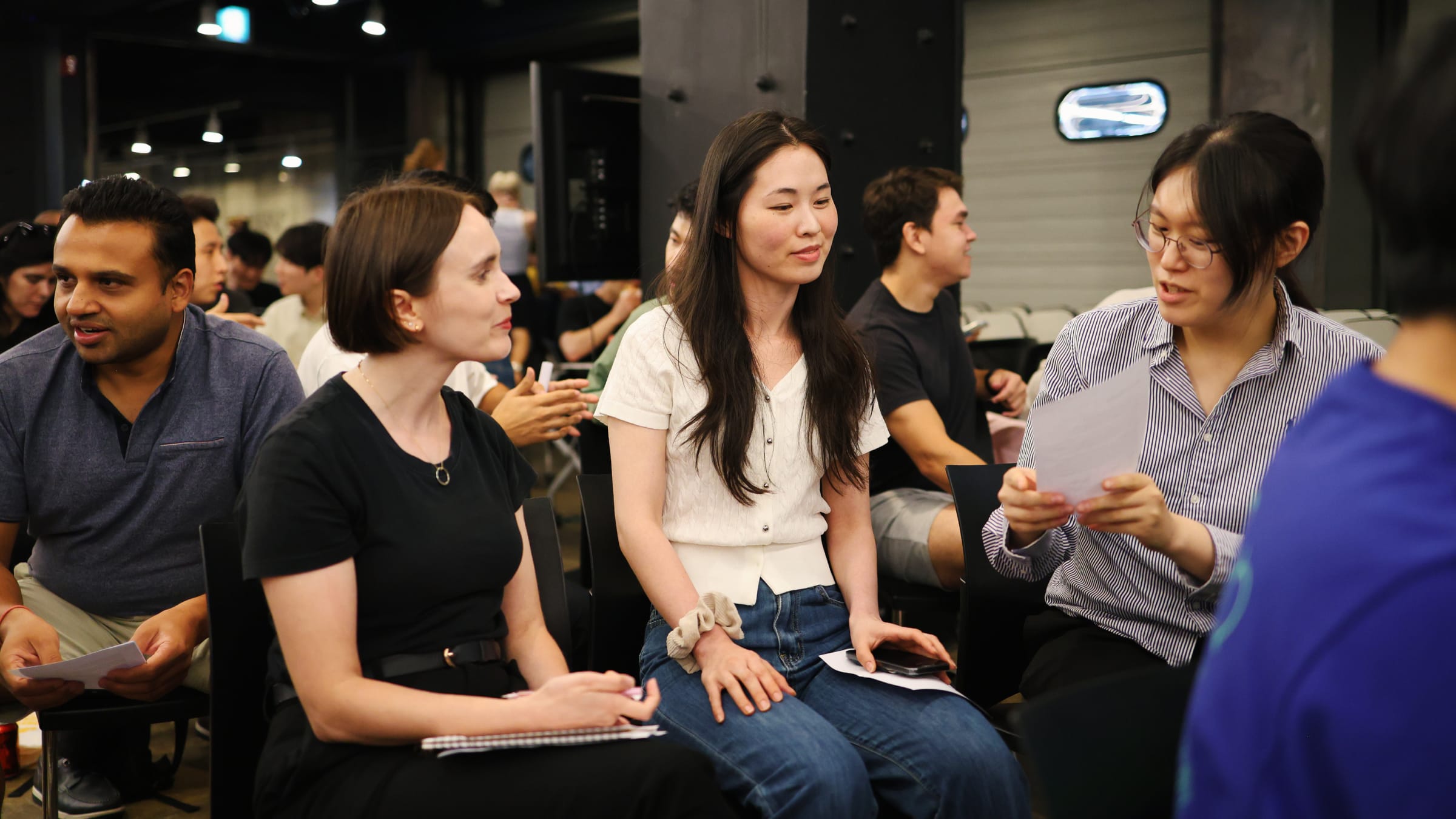
What came back afterward was more interesting than the exercise itself. One attendee said that nodding and smiling kept him more attentive, that he stopped drifting because his body was engaged in the conversation. Another described conversation as ping pong, where you're always anticipating what comes back.
Structure
The second half took on a belief that runs deep in technical fields: more detail is better.
His counter-argument was to put you in the interviewer's chair. Ten candidates between 10am and 3pm. You're tired. Someone walks in and talks for five minutes without pausing, in jargon, to impress you. They may well be smart. You don't remember them and you're exhausted. There's also a psychological cost to volume, since we associate more words with concealment.
Under pressure, most people speak in circles. Scripts evaporate. That's what fight-or-flight does.
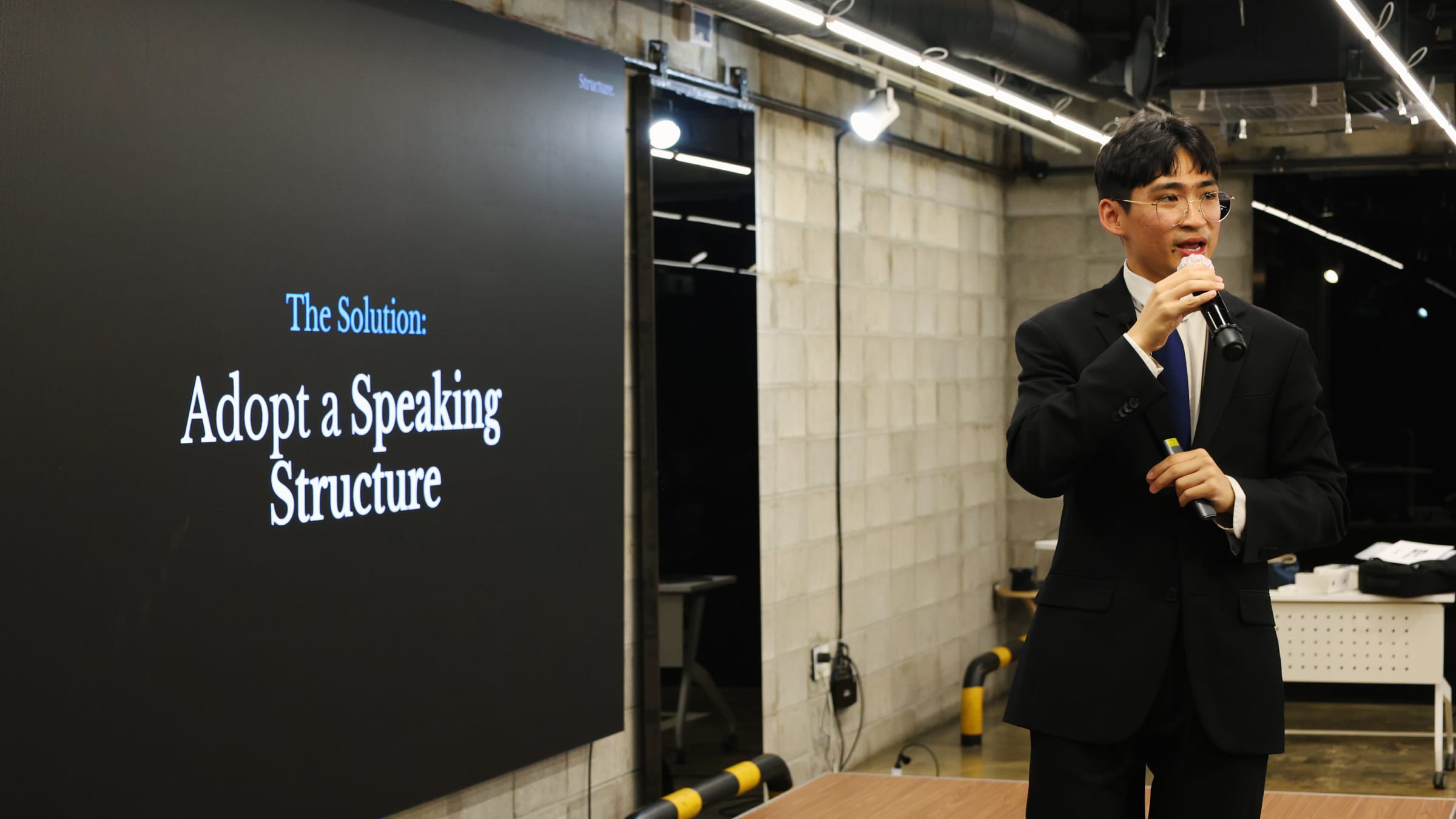
His fix is having a structure in your head before you open your mouth. He gave three:
- PREP. Point, reason, example, point.
- Problem, pain, solution.
- Fact, opinion, reason. Useful for pushing back on someone tactfully.
He demoed PREP by answering "what's your favorite animal" twice, once meandering and once structured, and the structured version was noticeably easier to hold onto. The framing that stuck: structure sorts your words into compartments in the listener's head, so they can actually retrieve them later.
Second exercise, new partners, real interview questions from the handout. Answer using one of the structures, then get feedback from the person who asked, and write it down on your phone, because you won't remember it otherwise.
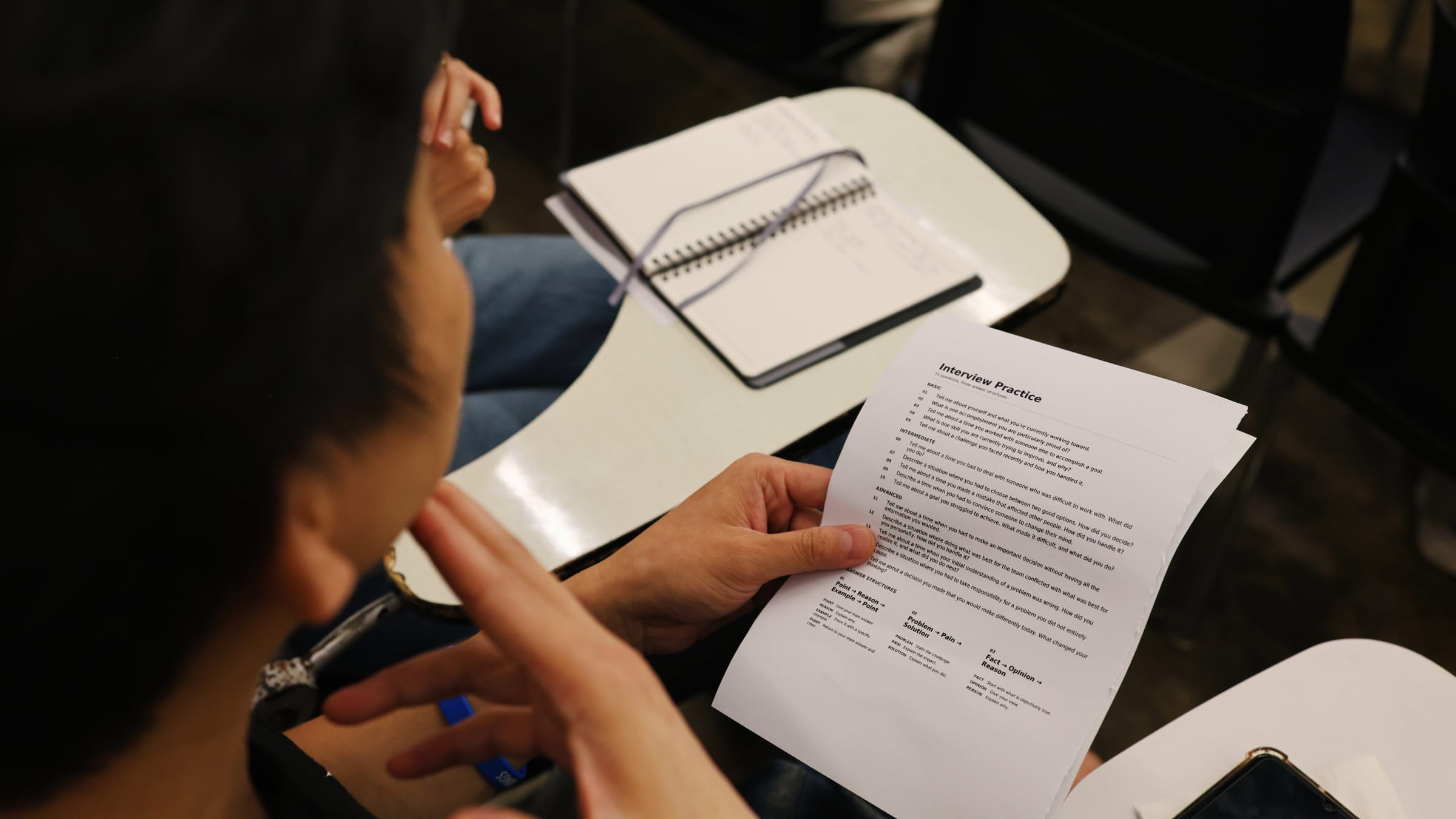
The self-diagnoses afterward were the best part of the night. One person realized he repeats himself and jumps around, 1-2-3 then 1-3-1-2-3. Another caught herself mid-answer thinking "what am I doing?" A third had done 30+ interviews and never used any structure at all, and had been assuming the interviewer already knew what he was talking about.
Q&A
The questions were unusually personal, which is a good sign.
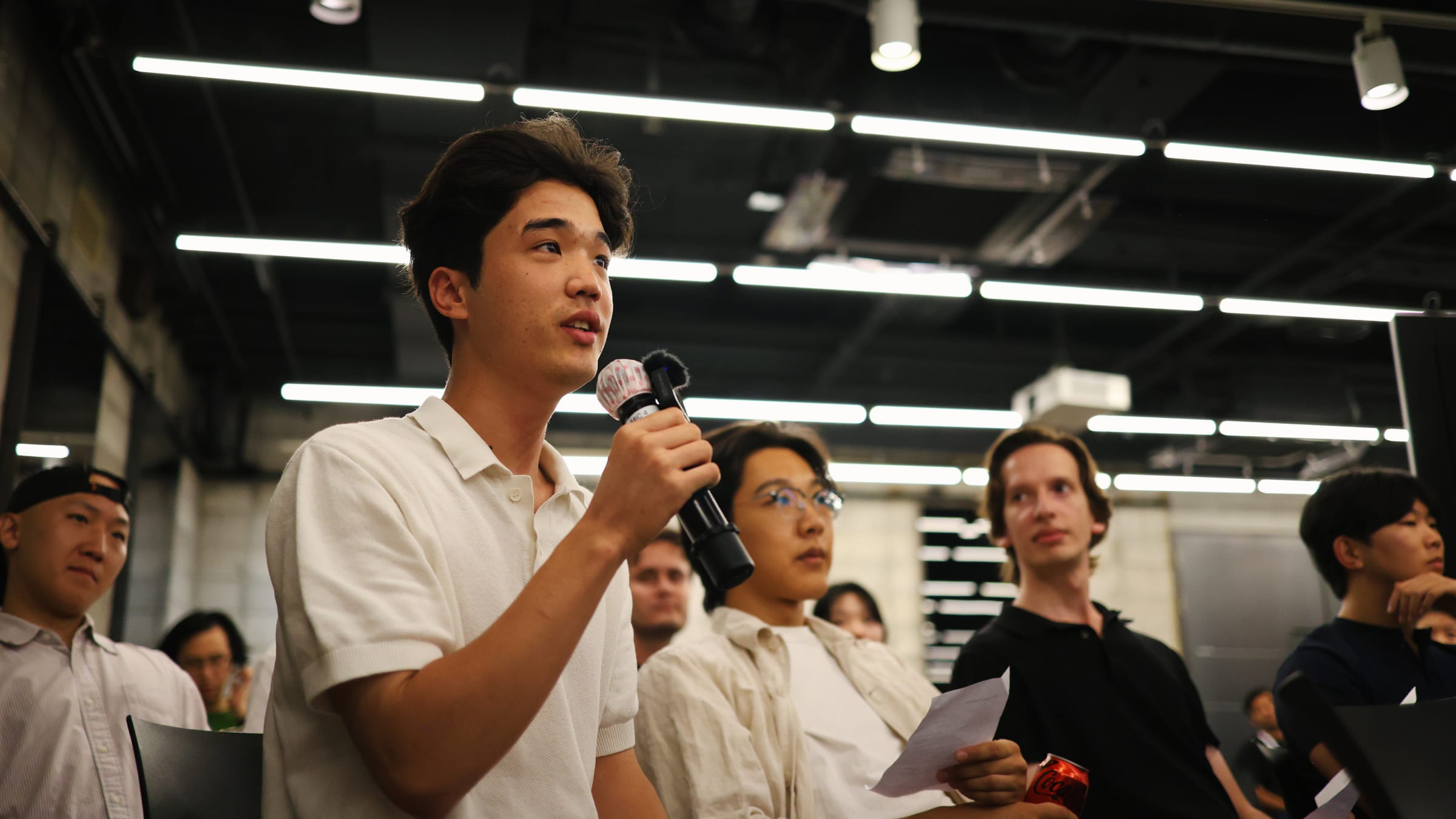
Someone asked what to do when you're asked something you don't know. Don't invent an answer, and don't just say you don't know. Draw a boundary and then move to what you do know: I can't answer that exactly, but if you're asking about X, here's what I can tell you.
Someone asked what to do when you forget your words. Prevention: speak about 20 percent slower than feels natural, because nerves make you speed up. Recovery: pause, breathe, skip to the next thing, and mention what you missed at the end if it comes back.
Someone asked how to handle an interviewer with cold energy. Minson's answer came from a professor of his who stayed relentlessly positive with every student, and whose reason was that she went into every conversation looking for something to help the other person with. His own version is blunter, a phrase he repeats to himself: that ain't my energy.
And someone asked, honestly, how to feel confident around senior engineers when you feel less smart than them. He was careful with that one. He said it's a real problem and outside his expertise to solve psychologically, then offered the one thing he could: pick a small mechanical change, like the downward inflection, and use it next time you talk to them. The confidence follows the action, not the other way around.
His closing was a warning. The skills are useless without practice, and if nobody reflects after their next interview then the two hours were wasted. Five minutes alone afterward, write down what worked and what didn't, pick one thing, apply it next time.
A surprise five minutes
Then something we hadn't planned. Quincy Larson, founder of freeCodeCamp, happened to be in the room that night and got up for five minutes on how to use scaffolding to make your coding agents less dumb.
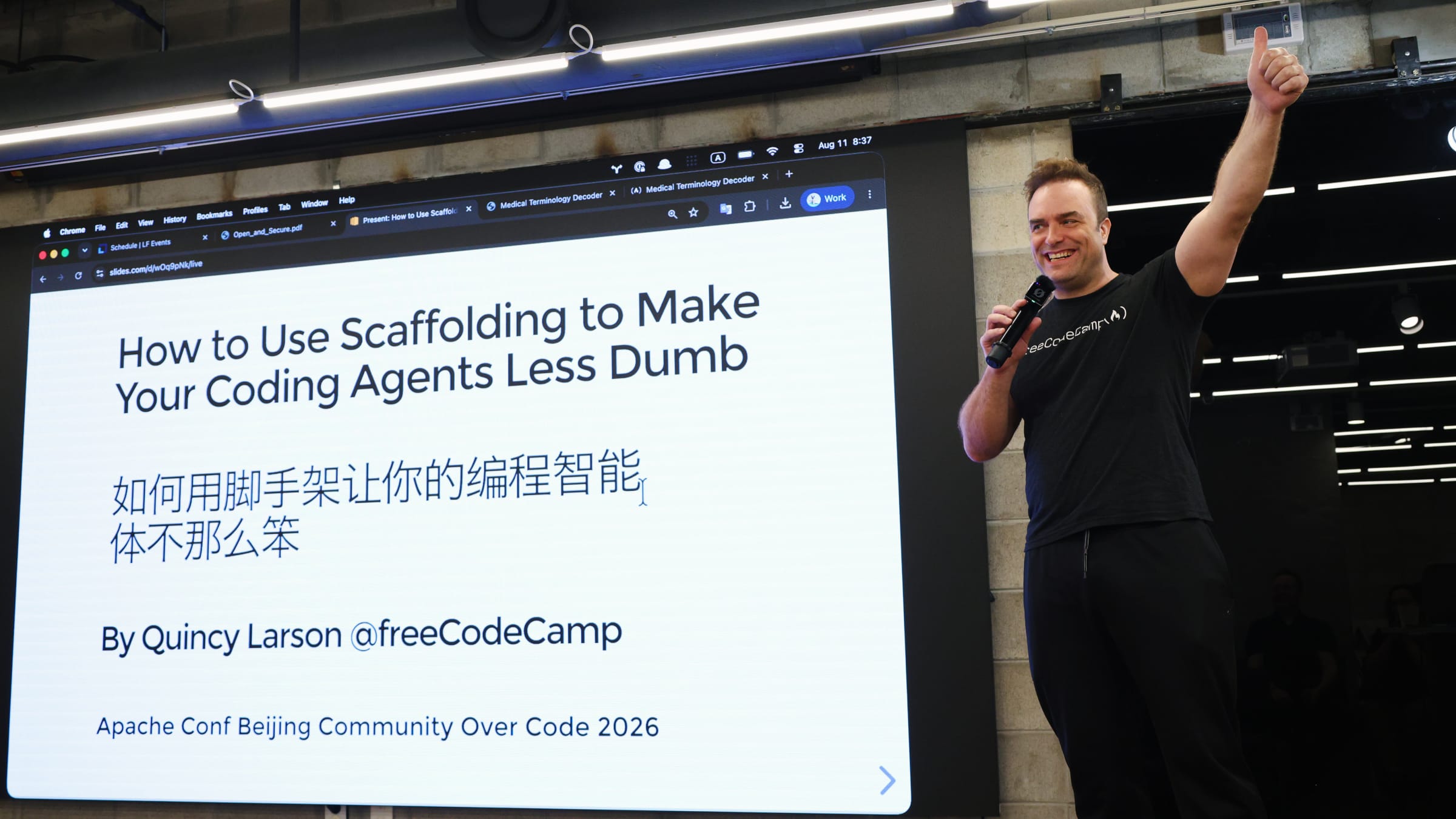
Unannounced, unrecorded, and the room was delighted. A decent argument for showing up in person.
The room
Food at check-in was pizza and burgers, the burgers again from Cry Cheeseburger.

The mood afterward was different from a normal event. People had spent an hour talking to strangers as part of the program, so networking didn't need a warm-up.
The event ended at nine. Everyone moved outside and kept talking in front of the building for the next two hours. I left at 11:15pm and there were still people out there, still going.
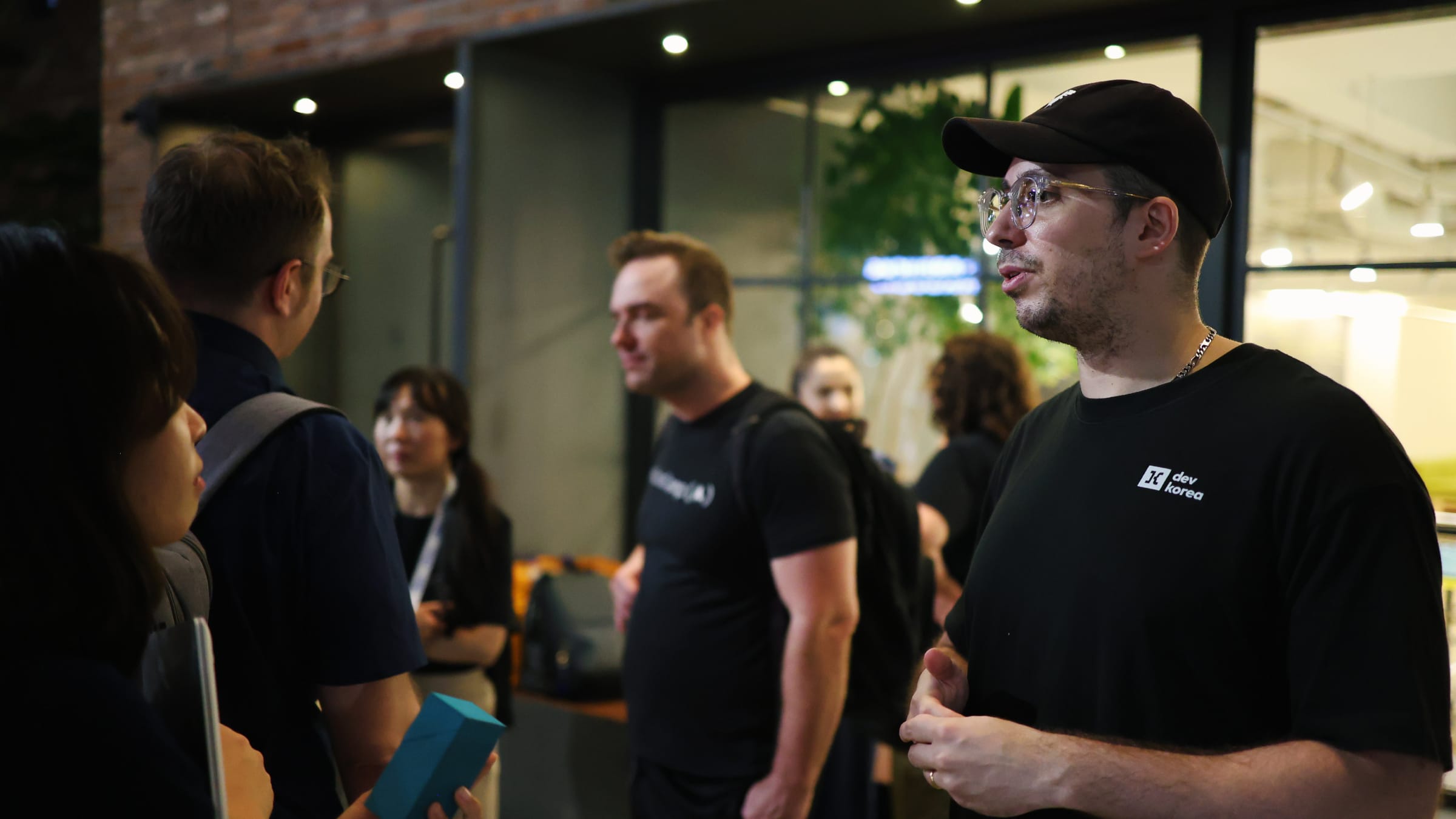
The feedback since has been the best of any event we've run. We'll do more like this.
Huge thanks
This event wouldn't have happened without:
- Minson Vo for a format we hadn't tried, and for showing us it works
- Quincy Larson for getting up with no notice
- MARU for the space
- Cry Cheeseburger for the burgers
- The volunteers who kept the night running: Bertijn, Brian, Nathaniel, Oscar, and Suhyun
- And everyone who paired up with a stranger and practiced out loud instead of sitting it out
Watch the workshop
The full session is online:
You can find every published Dev Korea talk on our talks page.
See you at the next one.
Ready for your next move?
Visit Dev Korea to explore the latest job openings at dev-korea.com/jobs, or if you're hiring, post a job at dev-korea.com/post-a-job and connect with our growing international tech community.