

Inside the life of Alyona, a global designer building Korea’s blockchain future
이 글은 한국어로도 제공됩니다. 한국어로 읽기 →Meet Alyona, a Russian UI/UX designer at Gurufin in Seoul. We sat down with her to learn about her journey from Russia to Korea, what it's like working in tech here, and why she believes more global talent should consider a tech career in Korea.
Profile snapshot
- Name: Alyona Vin
- Nationality: Russian
- Current role & company: UI/UX Designer at Gurufin
- Years in Korea: almost 5 years
- Visa status: E7
- Languages spoken: Russian, English, Korean
- Previous countries worked in (if any): Russia
Background & career
Q. Can you briefly introduce yourself and your current role?
Hi! I’m Alyona — a designer who loves drawing, creating NFT characters, and working on UI/UX projects. I’m a full-time multi-tasker who also occasionally dives into frontend development. Outside of work, I ride motorcycles like a pro, explore new places, and somehow manage to mix creativity with code. At work, I turn ideas into visuals… and sometimes even into functional code!
Q. What was your career path before moving to Korea?
Oh, this is going to sound funny! By education, I’m actually a civil engineer, haha. But I worked for six years as a flight attendant for a Russian airline. Due to certain circumstances, I moved to Korea, and here I started studying design.
Q. What inspired you to work in Korea?
I was thinking about how to stay in Korea, and at first I joined a program for foreigners (OASIS) who wanted to start a tech startup. Thanks to this program, I also learned how business works in Korea and realized that there are many benefits and privileges for the IT sector here. But I realized it was better to gain experience working in a company before starting my own. I wouldn’t say it was inspiration, more like life circumstances — a way to survive and grow.
Experience working in Korea
Q. Tell us briefly about your company (size, industry focus, notable achievements).
Gurufin is a blockchain and fintech company with around 40 employees, focused on building a next‑generation Layer‑1 mainnet and global payment infrastructure. They offer services like stablecoin issuance, Web3 apps, and NFT platforms. Recently, they launched the GX Chain to support high‑speed transactions, low fees, and real‑world payment integration. The company combines fintech with blockchain solutions, aiming to make crypto and payments more accessible and compliant.
Q. How did you find your current job? Was the hiring process challenging as a foreigner?
I found my current job through Saramin. Honestly, the interview was great, but I thought I had failed it after talking with the boss, haha. I accidentally responded with the word ‘다시?’ (dasi meaning “again?“) when he asked me to tell about myself. I had just said it 10 minutes earlier and didn’t mean it in a rude way — I just hadn’t finished my sentence explaining whether I should give a brief or full introduction, haha. But I got an offer after a few days and I was so surprised.
Overall, the job search process is really challenging for a foreigner in Korea. Even if your skills are good and everything looks perfect, just being a foreigner can sometimes prevent you from getting a job.
Q. Can you describe your typical workday?
I usually arrive at work around 8:40–8:50. First, I make myself some tea and then check my emails and all our work chats. Lately, I’ve been drawing an NFT character because we’re planning to create a collection for people to buy and trade. I really enjoy it because drawing is my hobby, and it’s also why I started studying design. About 3–4 months ago, I became interested in how to create NFTs and wanted to learn it — thank God my wish came true, lol.
During the day, I mostly draw and sometimes help design for my colleagues. Lunch starts at 11:30, and the company covers the cost, but I try to watch my diet and bring my own food. I usually spend the lunch money on fruits or small treats, haha. Sometimes we have team lunches.
After lunch, the office comes alive and we chat about plans and what could be improved. No one at the company does overwork, so I usually leave at 6 PM if I notice the time, haha. But I get so immersed in design that sometimes I leave around 6:10–6:20.
Q. How does Korean work culture compare to your home country's?
Oh, there's a big difference. In Russia, people are more open — if something is wrong or there’s a problem, we speak up directly so that conflicts don’t happen and work goes smoother. In Korea, this is a bigger issue. People may stay silent until the very end, even when a problem is about to become a disaster, but they won’t risk telling the truth.
Also, in Russia, skills and results are valued more, but in Korea, that’s not always the case — communication is considered more important. However, this can be a challenge for Koreans themselves because they often struggle to communicate well with foreigners. In Korea, you need to develop your ‘눈치’ (nunchi) — the ability to sense or anticipate things in advance, or just need to get super power like reading minds, haha.
Q. Do you speak Korean at work? How is communication handled in your team?
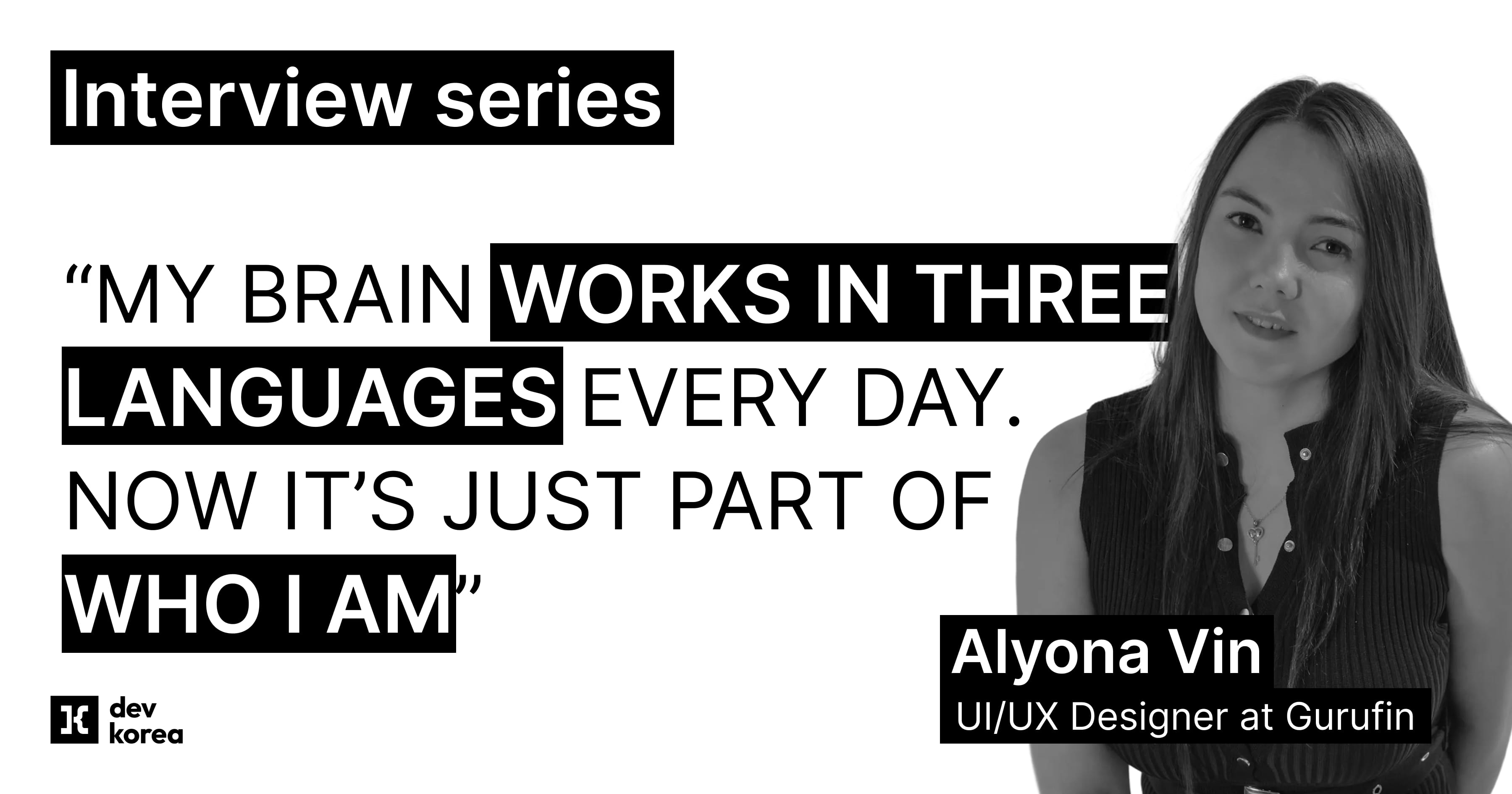
I work in a global team, so I mostly communicate in English, but with Koreans I speak Korean. My boss is Korean-American, and we use both languages. My brain works in three languages every day — it used to drive me crazy, but now I’m used to it. It’s even fun sometimes when I can mix Korean and English words in the same sentence.
Q. What challenges have you faced adapting to Korea's work environment?
There were many challenging situations. A big problem is that small companies in Korea sometimes hire foreigners to work on a project and then let them go. All companies in Korea have a three-month probation period, which can be frustrating because some companies take advantage of it. For a foreigner who depends on a work visa, this probation period is a huge source of stress.
There was one case where the company hired programmers and me as a designer to complete a project. We were pressured every day to finish it as quickly as possible, with the expectation that everything should be done in a month. When we completed the project, the company said our work was bad and that we were no longer needed. Yet, they launched the program we built, and it is now running and generating revenue. It was a very unpleasant feeling, like we were just used. Even the Korean colleagues were shocked that we were let go.
Lifestyle & community
Q. What's your life outside of work like? How have you built your social life here?
Outside of work, I ride my motorcycle and visit new places — I think I’ve probably seen more of Korea than many Koreans, lol. Sometimes I meet with friends from my motorcycle team. I also go to church and do volunteer work there, mostly in media and design.
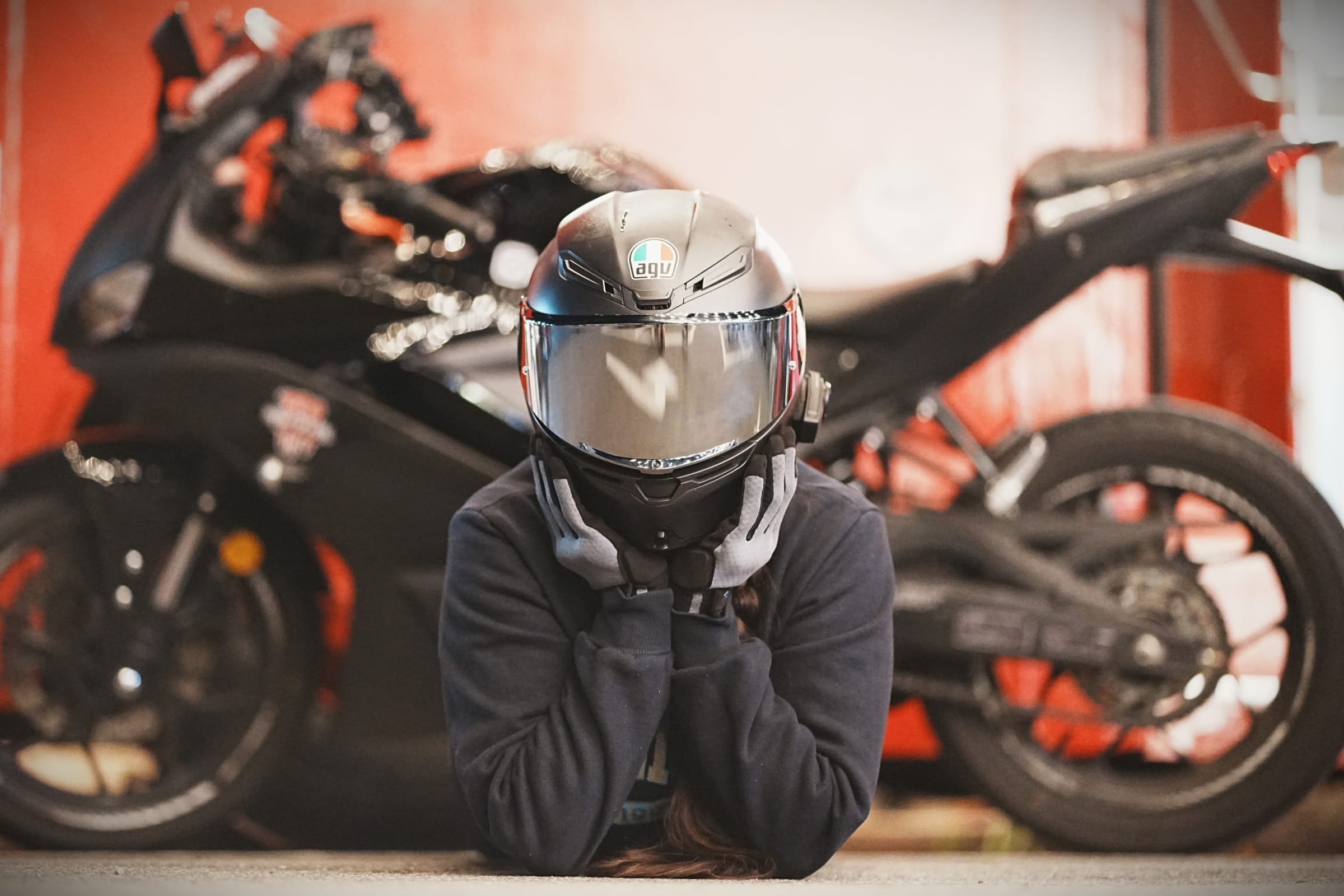
At first, I mainly socialized with Koreans because I thought it was the best way to deeply understand the culture and learn the language. But recently, I’ve started meeting more foreigners and have met many wonderful people, including my boyfriend, so it makes me happy to talk with many people from other countries.
I also stay active through sports and am learning programming. I plan to transition from design to frontend development, and eventually to fullstack. I find it really exciting and motivating.
Q. How much has knowing Korean (or learning it) helped in your daily life?
A lot. Knowing Korean makes life in Korea much easier, even for simple things like going to the tax office or handling documents. Sometimes Koreans even change the way they treat me once they realize I can speak Korean.
In the beginning, learning Korean became essential for me. The first four times I traveled to Korea, I didn’t speak the language at all, and it was really difficult. I often noticed people talking about me, and that actually motivated me to start learning Korean. I began with a private tutor, and by the time I came back to Korea, I could already understand a little. It was funny — people were guessing where I was from and even commenting on the length of my hair, lol.
When I decided to move to Korea, I knew I needed to learn the language properly, so I enrolled in a Korean language program at Yonsei University. And as someone who completed that course, my advice is: you don’t need to pay extra just for a famous university name. Most schools teach the same material, and if the student doesn’t study, even the best school won’t help.
Q. What was your biggest culture shock when you first arrived?
Probably the emphasis on respecting elders. I think it’s sometimes taken too far, and the older generation can take advantage of it. I respect elders, but when it crosses the line and causes harm, I can’t accept it.
Reflections & advice
Q. Do you plan to stay in Korea long-term, and how do you see your career evolving here?
To be honest, life in Korea changes every second, and you never know what might happen tomorrow. For now, I’m staying here and doing my best, but I’m keeping an open mind about the future.
Q. What tips would you give to someone searching for a tech job in Korea?
Learn Korean, because it greatly increases your chances of finding a job. Also, don’t hesitate to apply to any company — you never know which one might be interested in you. At first, I only applied to certain companies, but later I started applying everywhere and ended up receiving unexpected offers.
Q. What can Korean companies do to better support and integrate international employees?
They could try to treat international employees the same way they treat Korean employees — with respect and equal consideration. Companies shouldn’t assume that because someone is a foreigner, their needs can be ignored. Also, investing in English education would help a lot, since Korea is becoming more open, and I’m sure there will be even more foreign professionals in the future.
Q. What's one thing you wish you knew before moving here?
I wish I knew that in Korea you need translated and notarized copies of almost every document. It’s better to prepare several certified translations in advance — and get an apostille if possible — because you’ll be asked for these papers everywhere.
Q. Would you recommend Korea to other international tech professionals, and why?
Yes, I would. Korea is a great place to grow your skills and develop real stress resilience. The work culture is intense, but it pushes you to become faster, more adaptable, and more capable overall.
Rapid fire
- Favorite Korean food: 닭한마리 (dalkanmari which is a South Korean chicken soup dish)
- One must-visit place in Korea: 천상의정원 수생식물학습원 (chonsangijongwon susaengsingmulhaksseubwon, a beautiful lake)
- Most surprising thing about Korean tech culture: One of the most surprising things about Korean tech culture is that your specific job title doesn’t matter as much — you’re expected to be multi-skilled and do many different tasks lol. People often take on responsibilities outside their main role, so being flexible and versatile is really important.
- Favorite Korean word or phrase: 천리 길도 한 걸음부터 (cholri gildo han goreumbuto meaning “Even a journey of a thousand miles begins with a single step.”)
Connect with Alyona
- LinkedIn: /in/yonavin
- Website: yonavin.github.io/portfolio-new
If you want to be next and contribute, send us an email at [email protected].
Ready to explore your next move? Visit Dev Korea to check the latest job openings, or if you're an employer, post a job and connect with our vibrant community of tech talent eager to contribute to Korea's innovation ecosystem.