How a French designer built her own studio in Korea
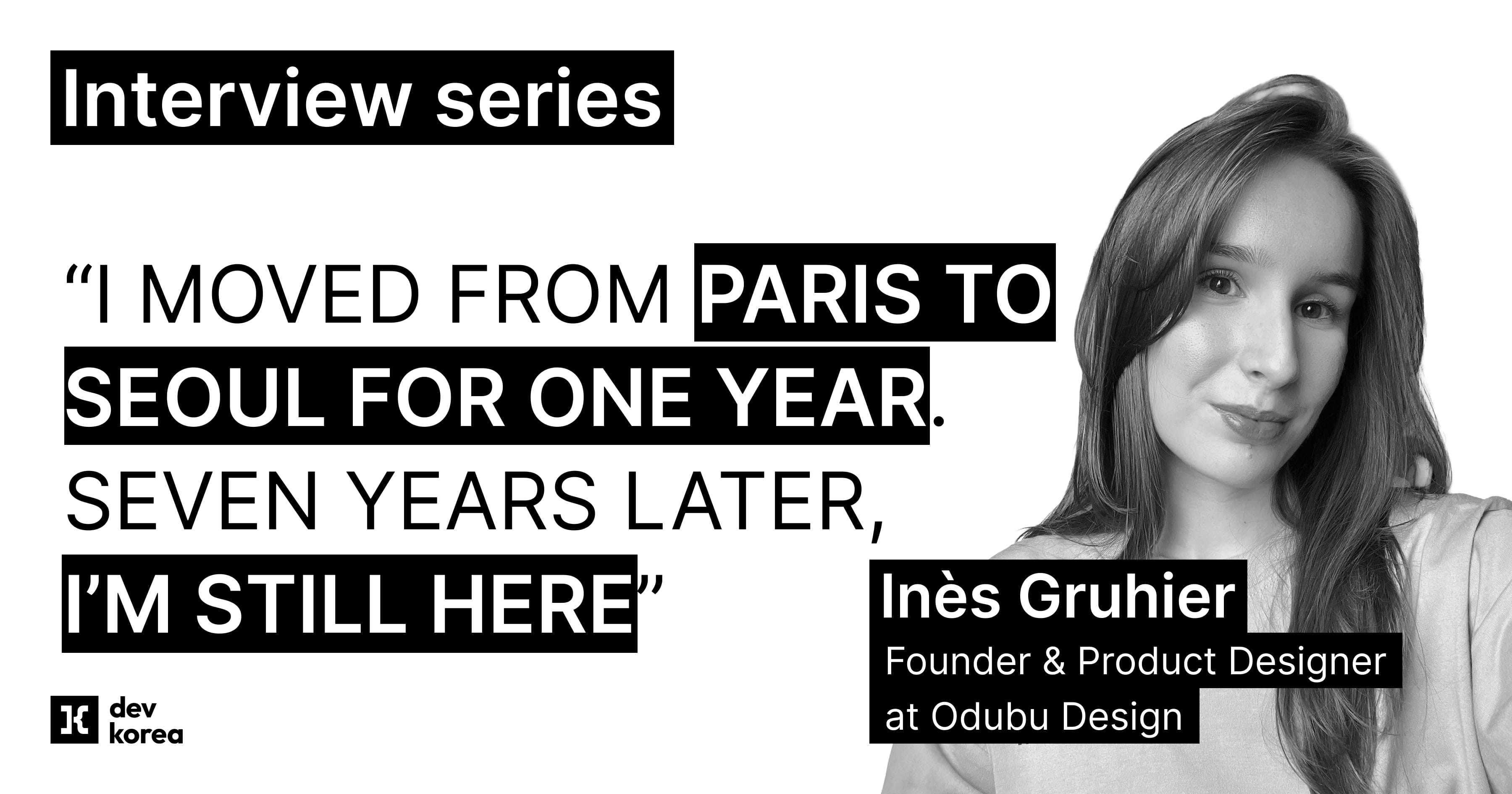
이 글은 한국어로도 제공됩니다. 한국어로 읽기 →Meet Inès Gruhier, a French UX/UI designer at Odubu Design in Seoul. We sat down with her to learn about her journey from France to Korea, what it's like working in tech here, and why she believes more global talent should consider a tech career in Korea.
Profile snapshot
- Name: Inès Gruhier
- Nationality: French
- Current role & company: Founder & Product Designer, at Odubu Design
- Years in Korea: 7 years
- Visa status: D-4 → D-2 → D-10 → D-8 → F-2-7
- Languages spoken: French, English, Korean
- Previous countries worked in (if any): None!
Background & career
Q. Can you briefly introduce yourself and your current role?
I'm Inès, a French product designer running Odubu Design, a one-person design studio here in Korea. I specialize in UX/UI design and design systems, but I also do web design, branding, illustration, and motion design.
Aside from running Odubu, I also became Mobbin’s first Korean app contributor, which led me to become their Community Ambassador for South Korea.
Experience working in Korea
Q. Tell us briefly about your company (size, industry focus, notable achievements).
Right now, Odubu Design is a one-person studio. I help companies think through how their products should look, feel, and work.
What sets my approach apart is collaboration. I don't hand off designs and disappear. I work closely with clients' development, product, and QA teams throughout the entire process, from ideation to production. When there's no in-house team, I partner with developers from day one. It means smoother handoffs, less back-and-forth, and products that genuinely work the way they're designed.
I've worked across diverse industries: from GHY on their English education workbook, to Bloxley, an American fintech where I helped shape their product from early days through market launch.
Beyond client work, I've also built my own:
- My Tiny Room, a cozy room-building game that reached 30K+ players in its first year;
- Dragonfly, a macOS and iPad Bluesky client;
- Design Sphere, a curated platform of design podcasts;
- and several puzzle games like Sudok-Hue and Cozy Sudoku.
- I also launched Eepy just a week ago, a timezone converter.
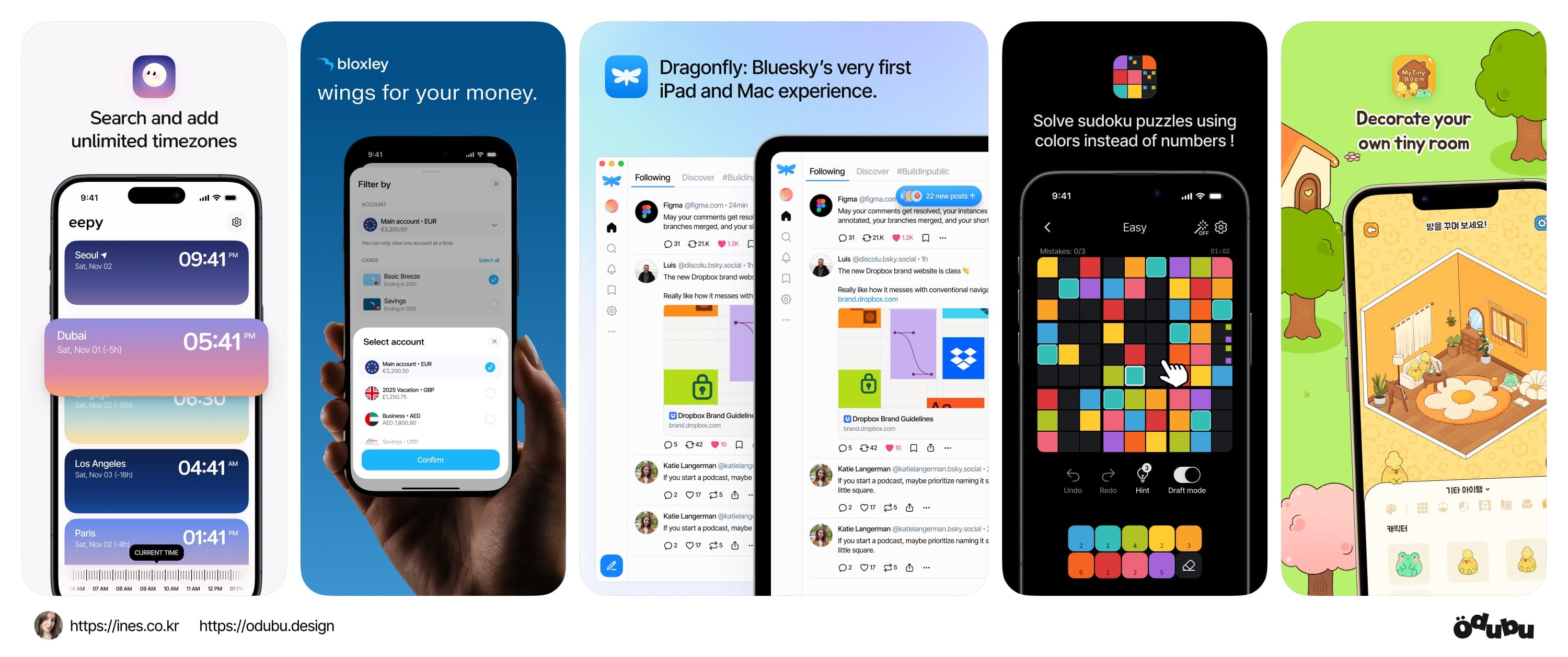
As Mobbin's first Korean app contributor, I documented designs from apps like Coupang, Coupang Play, Baemin, and Zigzag - work that led to becoming their Community Ambassador for South Korea.
Q. How did you build your business as a foreigner in Korea?
I initially looked into the OASIS program for tech startups, but quickly realized that wasn't for me, I didn't want to build a tech startup specifically.
So I did more research into visa options for creatives and entrepreneurs. I discovered the D8-1 visa, which is an investment visa where you invest in your own business. That felt like the right fit, so that's what I did. Eventually, I transitioned to an F-2-7 visa.
Being self-employed as a foreigner definitely has its challenges (visa requirements, accounting, navigating business systems in Korean). But having that initial support and clarity around the visa process made a huge difference in getting everything set up properly!
Q. What’s been your biggest challenge running your business?
Honestly, the biggest challenge is finding clients, especially Korean clients. Platforms like 숨고 (SoomGo) and 크몽 (Kmong) are saturated with designers competing on price rather than quality. Most of my work comes through referrals right now, which has been more reliable but also limiting when you're trying to scale… :)
I'm still figuring a lot of it out, but it's a learning process.
Q. Can you describe your typical workday?
What I love most about being self-employed is working wherever feels right that day. I spend most of my time in work-friendly cafés around Seoul, either alone or coworking with other freelancers.
My day typically starts with checking in with clients, emails, Slack, understanding what needs to happen that day. Then I'll dive into design work in Figma. I usually block out dedicated time for deep focus work, away from distractions.
I also make time for collaboration: jumping on calls with developers, discussing feedback, iterating on designs. That back-and-forth is crucial to me.
Outside of client work, I try to dedicate time to my own projects too, whether that's working on apps or staying up-to-date with design trends and tools. Recently, I've been experimenting a lot with Figma MCP, Cursor and Claude Code to see how I can optimize my design workflow and design-to-dev handoffs.
Q. How does Korean work culture compare to your home country's?
I haven't actually worked in France, so I can't compare directly. But I've definitely noticed differences working with international clients versus Korean clients here.
Korea moves fast. Like, really fast. The “ppalli-ppalli” (hurry) culture defines everything here, people expect quick turnarounds and high responsiveness. But it's a perfect match for me. I've heard "이네스 손이 빠르다" (literally, “Inès has fast hands”, meaning I work quickly and efficiently) countless times from professors, design partners, and clients.
The Korean pace is what I've gotten used to, and it's become my normal now. I thrive in that pace!
Q. Do you speak Korean at work? How is communication handled in your team?
I speak Korean, English, and French fluently, so I switch languages based on the client. With Korean clients, I work in Korean; with international clients, usually English. It helps build rapport and makes communication smoother.
Since Odubu is currently just me, communication is pretty straightforward, but I do collaborate closely with developers and other team members on projects.
Lifestyle & community
Q. What's your life outside of work like? How have you built your social life here?
I have a good friend group here, a mix of Korean friends and other expats. In Seoul, there’s always something to do, so it never gets boring!
I think the fact that I speak Korean fluently really helped me build a genuine social life, not just an expat bubble. I can hang out with Korean friends without everything revolving around the fact that I'm a foreigner, which makes a huge difference.
I’m also friends with many ajummas and baristas from my neighborhood!
Q. How much has knowing Korean (or learning it) helped in your daily life?
Learning Korean is the best investment you can make for your life here.
Beyond the practical stuff like ordering food or going to the doctor, speaking Korean fluently has let me build genuine relationships with people here. I'm not stuck in an expat bubble where everything is in English. I can actually integrate into Korean society, make Korean friends, and understand the culture on a deeper level.
On the business level, Korean clients take you more seriously when you can communicate in Korean. It shows commitment and respect for the culture.
It changed everything about my experience here.
Reflections & advice
Q. Do you plan to stay in Korea long-term, and how do you see your career evolving here?
I have no intention of going back to France. My family is there and I visit once a year, but I can't imagine living anywhere else at this point.
Career-wise, I want to keep growing my design studio. Right now I'm solo, but I'd like to eventually build a small team if the right opportunities come along. I'm also passionate about building my own products - it's where I have full creative freedom and ownership over what I create. gives me creative freedom and ownership that client work doesn't always allow. That balance is really important to me.
Q. What tips would you give to someone searching for a tech job in Korea?
First things first: learn Korean seriously. It's not optional if you want to stay long-term and build genuine relationships (whether business or personal). A lot of expats skip this step, which is why they end up leaving after a few years.
Research visa pathways thoroughly. There are several options (F series visas, D-8-1, D-8-4…) so figure out what works best for your situation. I went the D-8-1 route with help from a visa agency, and I highly recommend it. They provide information you simply can't find online or through 1345. It costs several millions of won, but it saved me a lot of time and stress.
And most importantly, be patient and kind with yourself. Adapting to a new country and work culture takes time. Give yourself space to learn and grow!
Q. What's one thing you wish you knew before moving here?
I wish I'd understood the visa system better before arriving. The rules are complicated, there are hidden pathways, and things change regularly. It's hard to know what's possible and what’s not.
Don't rely on random blogs or Reddit comments for visa information. Talk to lawyers, it's worth the investment.
My lawyer recently told me that to apply for permanent residency, you need to have spent no more than 180 days outside Korea in the 5 years before your application. I exceeded that limit, visiting my family and working from France about 2 months a year. That means I can't leave Korea for the next 2 years to reset the clock. That information was nowhere online.
Q. Would you recommend Korea to other international tech professionals, and why?
Absolutely !! Korea is an amazing place for tech and design professionals, especially creatives like me. One thing that really drew me here is how much Koreans genuinely care about design. It's refreshing !
That said, it's not for everyone. I've had close friends here for more than 5 years who ultimately decided to leave because they felt like they'd always be seen as "the foreigner". It's something people need to consider before committing long-term.
The journey is far from being easy, but if you commit to it it's incredibly rewarding. Fighting !!
Rapid fire
- Favorite Korean food: Right now I'm completely obsessed with 제육볶음 (jeyuk bokkeum). Even better when there’s a 쌈 option!
- One must-visit place in Korea: Probably cliché, but Jeju Island. It’s the perfect place to rest.
- Most surprising thing about Korean tech culture: Two things: first, how genuinely collaborative and supportive the community is. Second, And second, how global it is!
- Favorite Korean word or phrase: 두부 (dubu, tofu)! I love the word so much I named my company after it. It's such a soft, gentle word.
Connect with Inès
- Portfolio: ines.co.kr
- Company website: odubu.design
- LinkedIn: /in/ines-gruhier
- Bluesky: /profile/odubu.design
If you want to be next and contribute, send us an email at [email protected].
Ready to explore your next move? Visit Dev Korea to check the latest job openings, or if you're an employer, post a job and connect with our vibrant community of tech talent eager to contribute to Korea's innovation ecosystem.